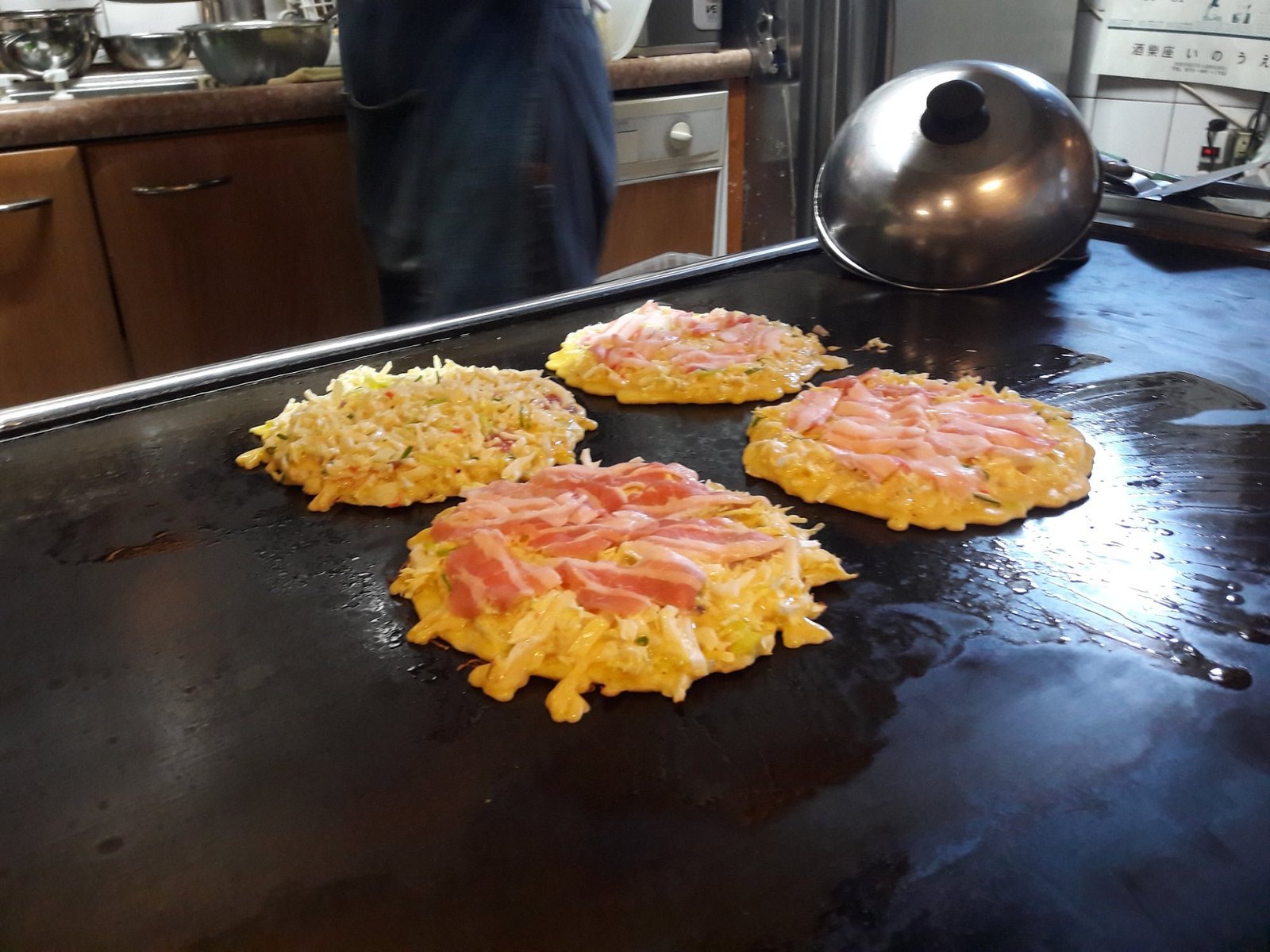
Often dubbed “Japanese pizza” by English speakers, okonomiyaki is actually a completely different culinary beast! If you are craving this ultimate Japanese comfort food, here is our curated guide to the best okonomiyaki restaurants in Kyoto where you can experience this savory delight for yourself.
What is Authentic Japanese Okonomiyaki?
Okonomiyaki is frequently translated as “Japanese pizza,” but this is a massive misnomer. It is actually much closer to a thick, savory grilled pancake or a rustic frittata. The magic lies in the batter, which combines wheat flour with nagaimo (mountain yam). This unique ingredient gives the pancake an incredibly fluffy, slightly gooey, and melt-in-your-mouth interior that you simply cannot achieve with standard flour.
In terms of mix-ins and toppings, absolutely anything goes. The name itself translates to “grilled as you like it” (okonomi means “as you like it,” and yaki means “grilled”). You will find it loaded with shredded cabbage, and customized with shrimp, squid, pork belly, octopus, or even melted cheese and mochi.
Kyoto Style vs Osaka Style
While okonomiyaki is more popularly associated with the neighboring Kansai powerhouse of Osaka, Kyoto has its own exceptional take on the dish. While Osaka is famous for mixing everything directly into the batter, Kyoto-style okonomiyaki often features a slightly sweeter, more delicate batter and places a heavy emphasis on high-quality, locally sourced Kyoto heirloom vegetables. It is inexpensive, unpretentious, and deeply satisfying. Unless you have severe gluten allergies, this is an absolute must-try. (And even then, a few spots offer gluten-free alternatives!)
Top Rated Okonomiyaki Restaurants in Kyoto
Here are the absolute best, most highly recommended okonomiyaki spots in Kyoto that we love.
Donguri Downtown Kyoto
Historic Local Atmosphere
If you are craving a massive, hearty, and deeply comforting meal, hit up Donguri. This beloved local institution has been serving spectacular okonomiyaki to the hungry masses since 1977. Stepping inside, you are greeted by a wonderfully nostalgic, Showa-era retro atmosphere that feels like a true neighborhood secret.
Locally Sourced Ingredients
What truly sets Donguri apart from standard chains is its special emphasis on using fresh, locally sourced Kyoto ingredients in their dishes. The chefs use crisp, sweet local cabbages and premium meats, resulting in a savory pancake that is incredibly flavorful, perfectly crisp on the edges, and fluffy in the center.
Chibo Kyoto Station Area
Reliable and Convenient Dining
Located conveniently in the Kyoto Avanti mall just south of Kyoto Station, Chibo is a highly reliable, failsafe option for perfect okonomiyaki. This famous, highly respected chain ensures that every single pancake is consistently awesome, featuring a perfectly crisp exterior and a light, airy interior.
Family-Friendly and English Accessible
Chibo is an incredibly family-friendly spot, complete with a dedicated kids’ menu featuring smaller portions and milder flavors. Furthermore, the staff is highly English-friendly, and the menu features clear pictures, making it a completely stress-free, easy choice for international travelers arriving or departing from the station.
Nishiki Warai Downtown Kyoto
Interactive Tabletop Grilling
For some seriously fun, interactive eating, try the okonomiyaki at Nishiki Warai, located just steps away from the bustling, famous Nishiki Market. The savory Japanese pancakes are cooked on a sizzling iron teppan griddle right at your table, allowing you to watch the magic happen.
Lively and Theatrical Vibe
The lively, energetic atmosphere and the theatrical experience of flipping and cutting your own pancake make it a highly entertaining spot for friends and families. The staff is always ready to jump in and help you achieve the perfect crispiness, ensuring a memorable and delicious dining experience right in the heart of downtown.
10 Frequently Asked Questions About Okonomiyaki
What does authentic okonomiyaki taste like?
Authentic okonomiyaki is a brilliant explosion of textures and flavors. It tastes savory, slightly sweet, and deeply umami-rich. The interior is incredibly fluffy and soft due to the mountain yam, while the exterior is beautifully caramelized and crispy. It is heavily complemented by the tangy, fruity okonomiyaki sauce, creamy mayonnaise, and savory bonito flakes.
What is the difference between Kyoto and Osaka okonomiyaki?
Both cities follow the Kansai style, where ingredients are mixed into the batter before grilling. However, Kyoto-style okonomiyaki often features a slightly sweeter, more refined batter and places a massive emphasis on using premium, locally grown Kyoto vegetables (Kyo-yasai), resulting in a slightly more delicate and structured pancake compared to the hearty, rustic style of Osaka.
Is traditional okonomiyaki gluten-free?
No, traditional okonomiyaki is not gluten-free. The batter is primarily made from wheat flour. While a few specialized restaurants might offer a 100% buckwheat or rice flour alternative, cross-contamination on the iron griddles is extremely high. If you have Celiac disease or severe gluten intolerance, it is generally not safe to eat.
Can vegetarians eat okonomiyaki in Kyoto?
Yes, but you must be very careful and communicate your dietary needs clearly. While you can easily order a pancake without meat or seafood, the traditional okonomiyaki sauce and the topping of bonito flakes (katsuobushi) contain fish. You must explicitly ask the chef to omit the bonito and ask if the sauce or batter contains dashi (fish stock).
Do I have to cook the okonomiyaki myself at the table?
It depends on the restaurant. At interactive, lively spots like Nishiki Warai, the batter and ingredients are brought to your table, and you cook it yourself on the built-in iron griddle. At more traditional or fast-paced spots like Donguri or Chibo, the chefs cook the okonomiyaki in the back kitchen or at a central counter and bring the finished, perfectly cooked pancake to your table.
What are the most popular okonomiyaki toppings and mix-ins?
The most classic and popular mix-ins include shredded cabbage, pork belly slices (buta-tama), shrimp (ebi), and squid (ika). For toppings, it is almost always drizzled with thick okonomiyaki sauce, Japanese mayonnaise, dried seaweed powder (aonori), and dancing bonito flakes. You can also add cheese, mochi, or fried squid bits (tenkasu).
How much does a plate of okonomiyaki cost in Kyoto?
Okonomiyaki is one of the most affordable and budget-friendly meals in Japan. At casual restaurants and chains like Chibo or Donguri, a standard-sized pancake typically costs between 800 and 1,500 yen. Even with a side drink and a small appetizer, a full meal will rarely exceed 2,500 yen per person.
What is the difference between okonomiyaki and monjayaki?
While they share similar ingredients, monjayaki is a Tokyo specialty that features a much runnier, looser batter. It is cooked into a messy, melted consistency and eaten with tiny, specialized metal spatulas. Okonomiyaki, on the other hand, has a thicker batter (thanks to the mountain yam) and is formed into a distinct, solid pancake that is cut into wedges with a normal spatula.
Where is the best okonomiyaki restaurant near Kyoto Station?
Chibo, located in the Avanti mall just south of Kyoto Station, is widely considered the best and most convenient okonomiyaki restaurant near the station. It offers a highly consistent, delicious product, an English-friendly menu, and a quick turnaround time, making it perfect for travelers on a tight schedule.
Is okonomiyaki considered a healthy meal?
Okonomiyaki is a mixed bag when it comes to health. On the positive side, a single pancake contains a massive amount of shredded cabbage and vegetables, providing excellent fiber and vitamins. However, it is bound by a carb-heavy batter and topped with sugary sauce, calorie-dense mayonnaise, and fatty pork belly. It is a rich, hearty comfort food best enjoyed in moderation as an occasional treat rather than an everyday health food.