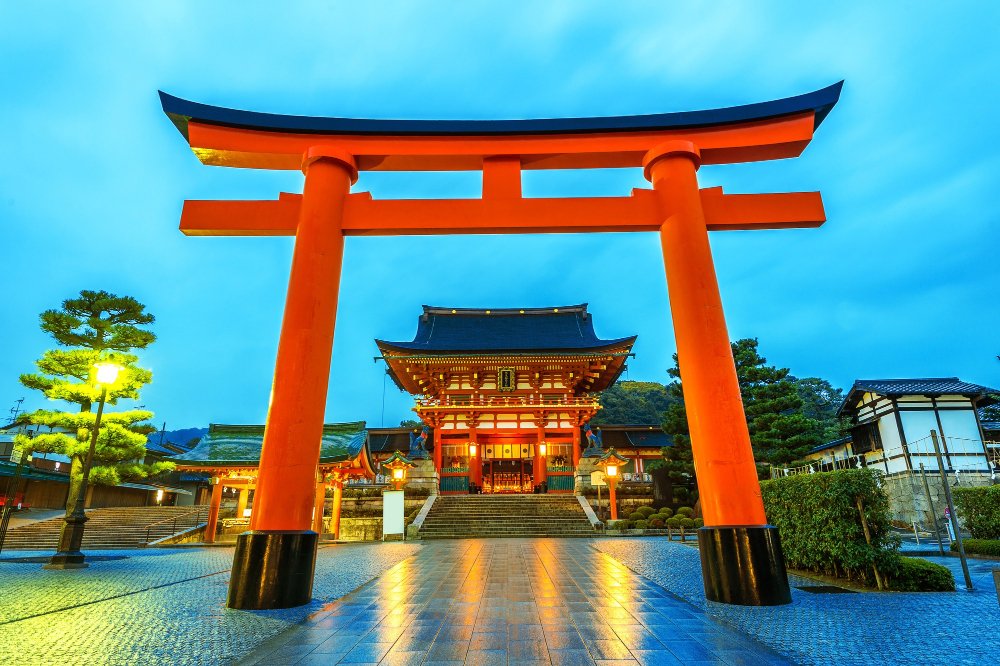
Quick Facts
- Total Time: 2 to 3 hours (full summit loop)
- Distance: 4 to 5 kilometers (2.5 to 3 miles)
- Elevation: 233 meters (764 feet) at the peak
- Difficulty: Easy to Moderate (mostly stairs)
- Cost: 100% Free (Shrine grounds and trails)
- Start/End: Keihan Fushimi-Inari Station or JR Inari Station
- Operating Hours: 24/7, 365 days a year
Getting There
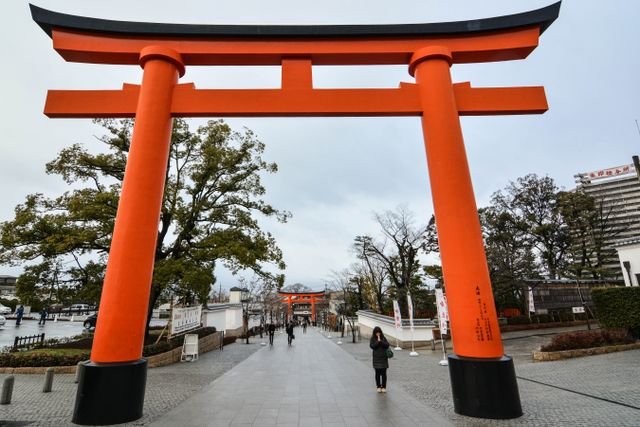
Reaching the trailhead is incredibly easy from central Kyoto. You have two main train options, both taking about 5 minutes from Kyoto Station.
Option 1: JR Nara Line (Best for JR Pass Holders) Take the local JR Nara Line from Kyoto Station to Inari Station. The shrine’s main entrance is located directly across the street from the station exit. Note: The JR Pass is valid here.
Option 2: Keihan Main Line (Best for Central/East Kyoto) If you are staying near Gion, Sanjo, or Shijo, take the Keihan Main Line to Fushimi-Inari Station. Exit the station, turn left, and walk uphill across the JR tracks. The entrance is a 2-minute walk. Note: The JR Pass is NOT valid on Keihan lines.
Torii Gates
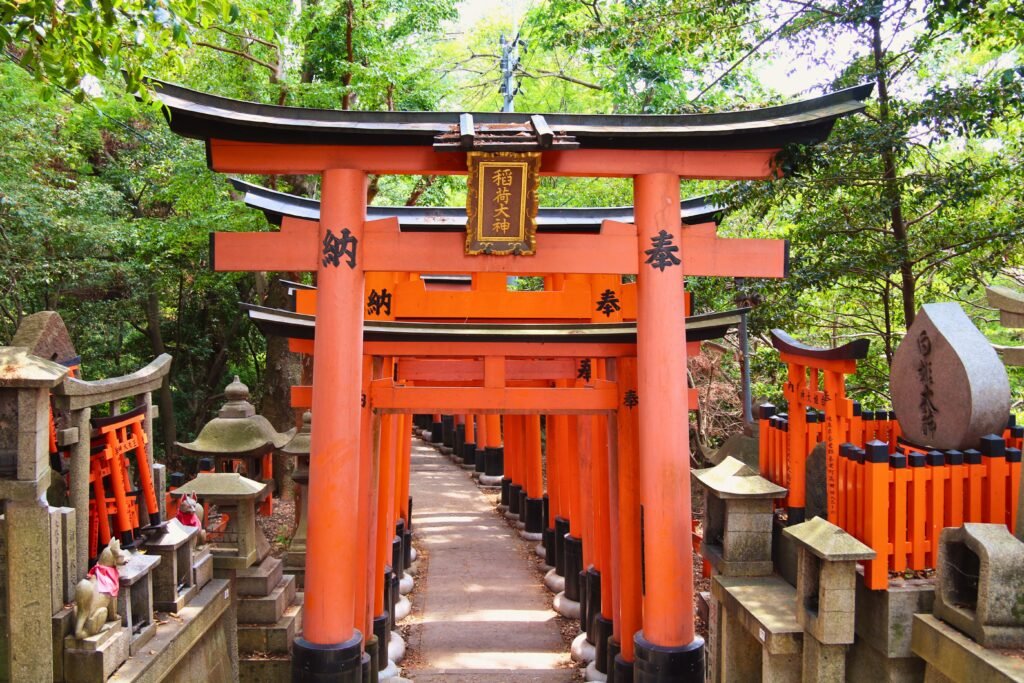
The trail features over 10,000 vibrant vermilion gates. Understanding their significance deepens the hiking experience.
The Meaning of Vermilion The striking red-orange color represents the sun and life force. Historically, the paint contained cinnabar (mercury sulfide), which was believed to ward off evil spirits and preserve the wood from rotting. Today, modern eco-friendly paints are used.
How Gates Are Donated Businesses and individuals donate gates to pray for prosperity, gratitude, or wish fulfillment.
- The Cost: A small gate costs around ¥400,000 ($2,700 USD), while massive pillars can exceed ¥1,000,000 ($6,800 USD).
- The Text: The front left side displays the donor’s name and the Japanese imperial year. The front right shows the exact donation date. The back features the kanji 奉納 (Hounou), meaning “offered with respect.”
Fox Messengers
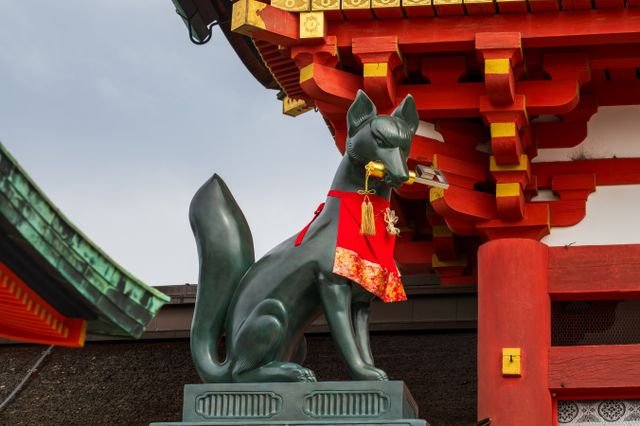
You will notice hundreds of stone fox statues (kitsune) guarding the shrine. Inari’s messengers are not worshipped themselves; they serve the deity. Look closely at what they hold in their mouths or paws:
- Key: Unlocks the rice storehouse (wealth and harvest).
- Scroll: Represents wisdom, sutras, or divine authority.
- Jewel: Symbolizes the spiritual essence or the soul of Inari.
- Tail: Represents the fox’s divine connection.
Hiking Route
Follow this detailed, step-by-step navigation to ensure you see every highlight and avoid common tourist traps.
The Main Precinct
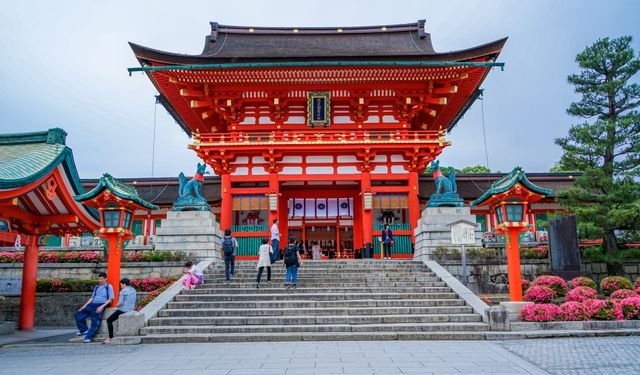
After passing the massive Romon Gate (donated in 1589 by Toyotomi Hideyoshi), you enter the main courtyard.
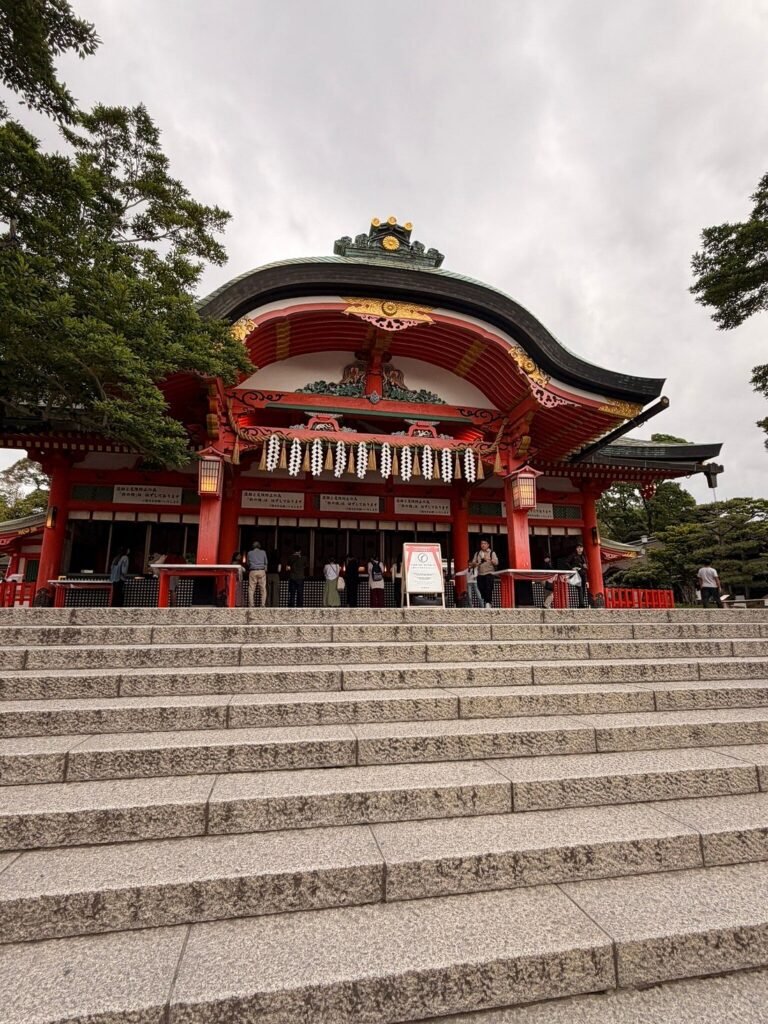
- Haiden (Main Hall): Toss a ¥5 coin (which sounds like “good luck” in Japanese) into the offering box. Bow twice, clap twice, pray, and bow once more.
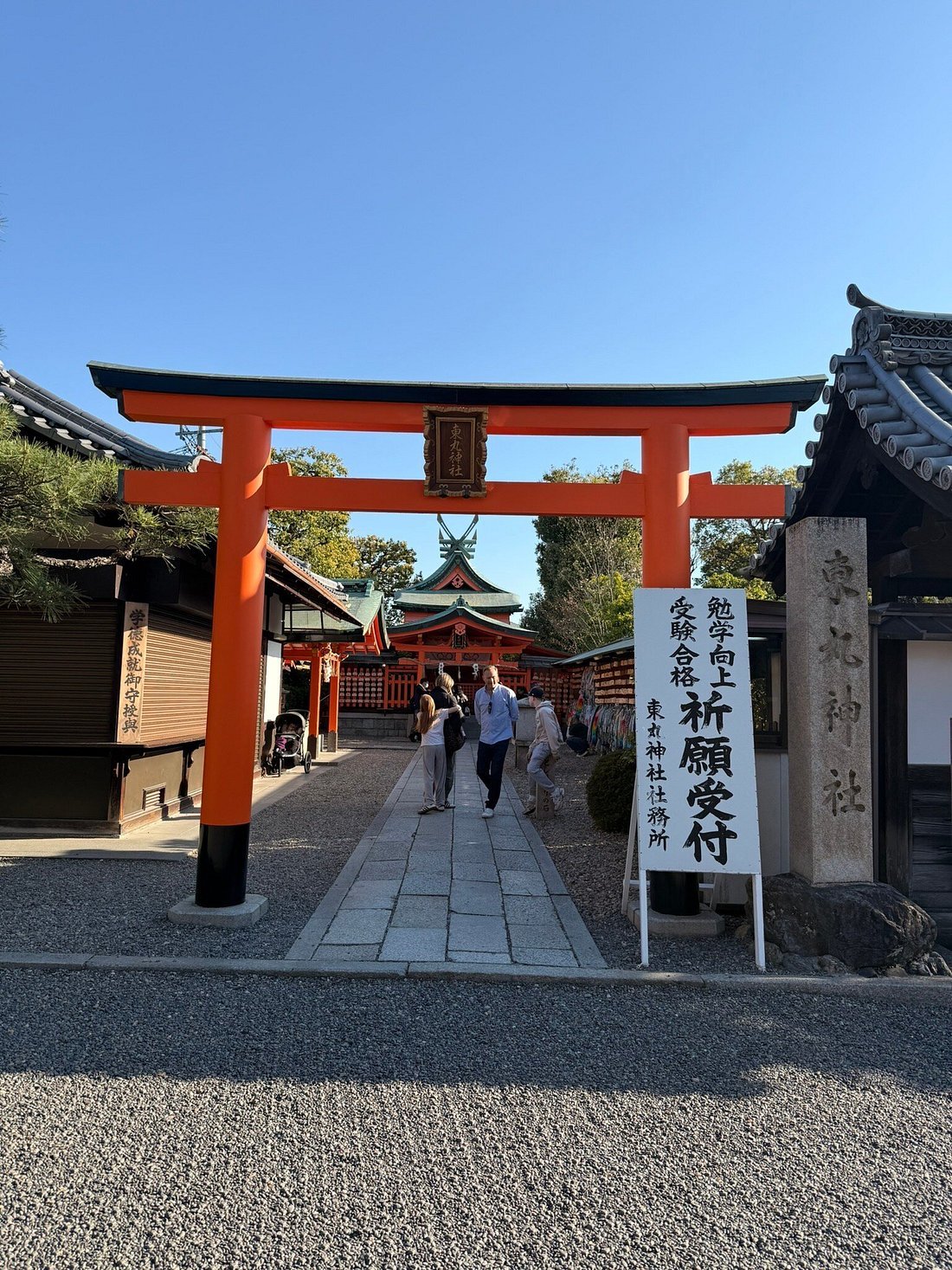
- Higashimaru-jinja: Located to the right. This sub-shrine is dedicated to academic success. Look for the thousands of beautiful origami cranes folded by students praying to pass university exams.
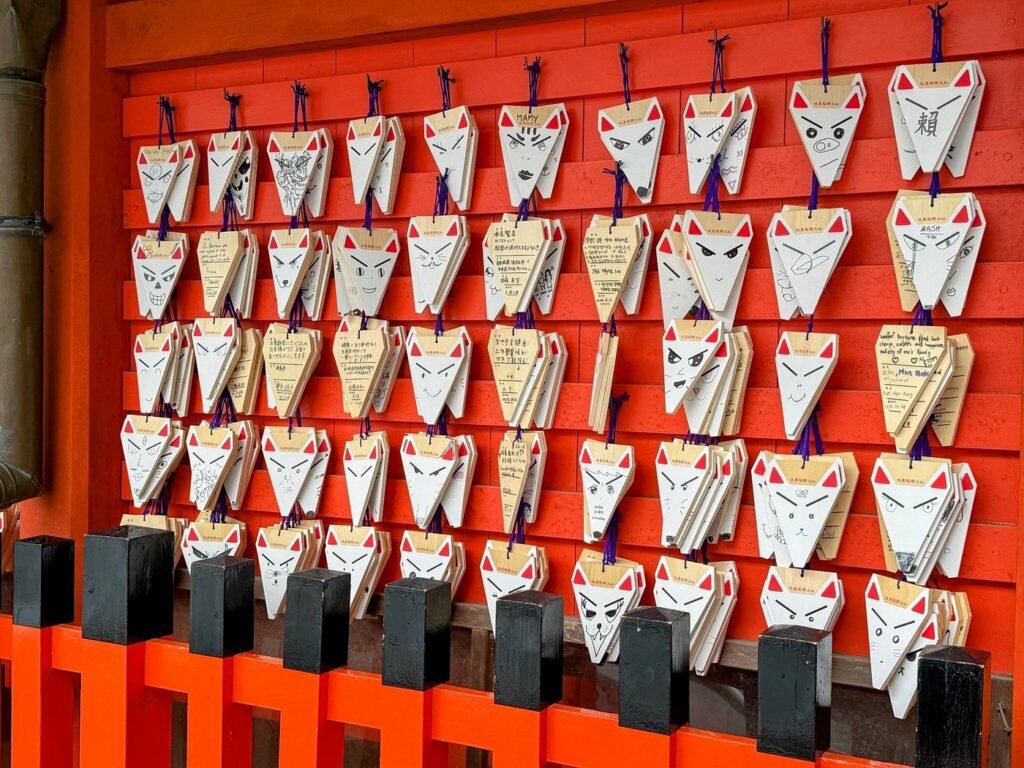
- Omikuji (Fortunes): Shake a wooden cylinder until a stick falls out. Pay ¥200 at the office to receive your paper fortune. If it’s bad luck, tie it to the wire rack; the wind will carry the bad fortune away.
Senbon Torii (Thousand Gates)
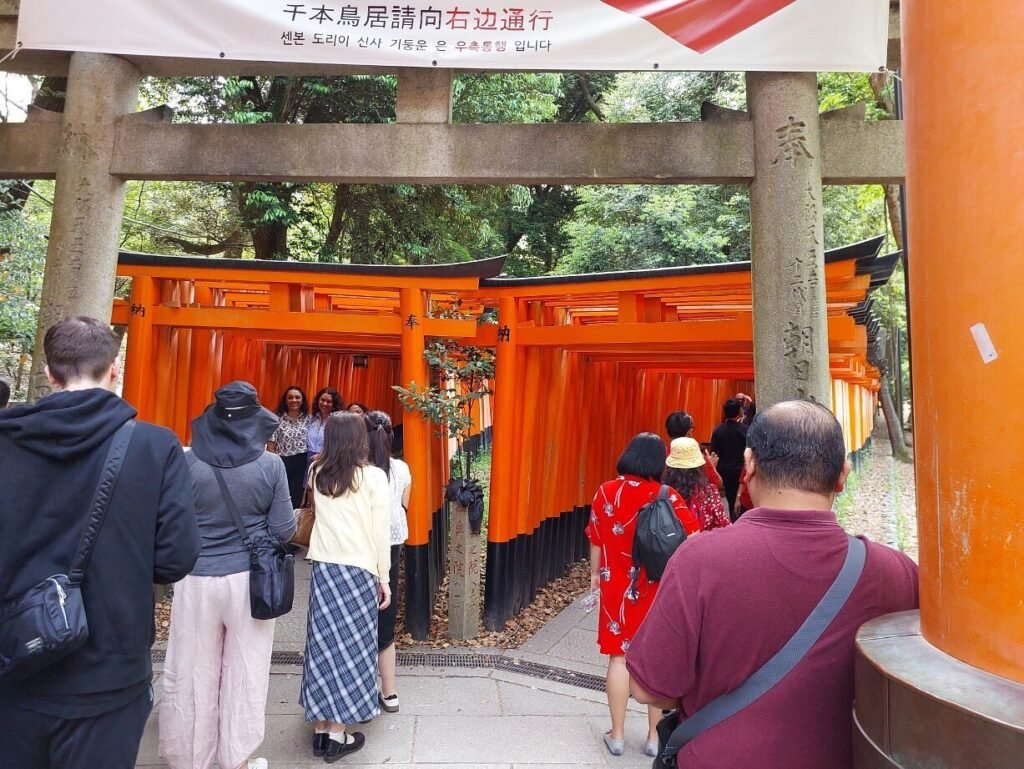
Head to the back of the main hall and begin the ascent. You will immediately enter Senbon Torii, a dense, mesmerizing tunnel of gates. This is the most photographed section. Pro tip: Stop at the very beginning of the tunnel to take photos looking back down at the crowds, or wait until you are halfway up to shoot looking forward.
Inner Shrine & Omokaru Ishi
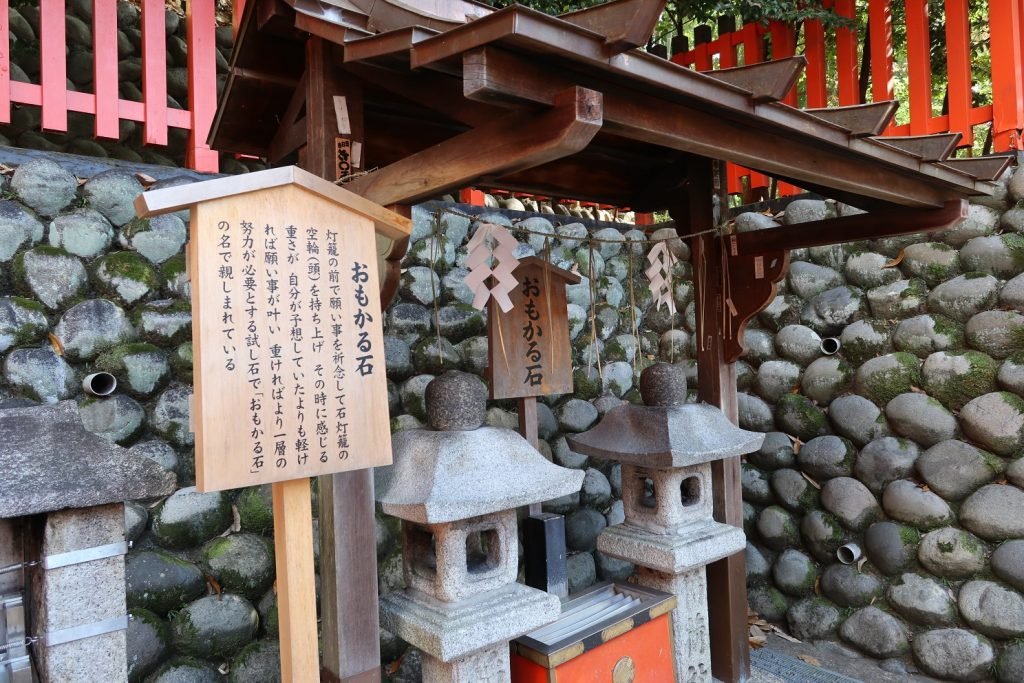
The trail opens up at the Inner Shrine (Okusha Haiden). Behind the main building, you will find the Omokaru Ishi (Weight-Stones). Make a wish in your mind, then pick up one of the stone lantern bases. If the stone feels lighter than you expected, your wish will come true. If it feels heavy, you will need to work harder to achieve your goal.
Shin-ike Pond & The Forest
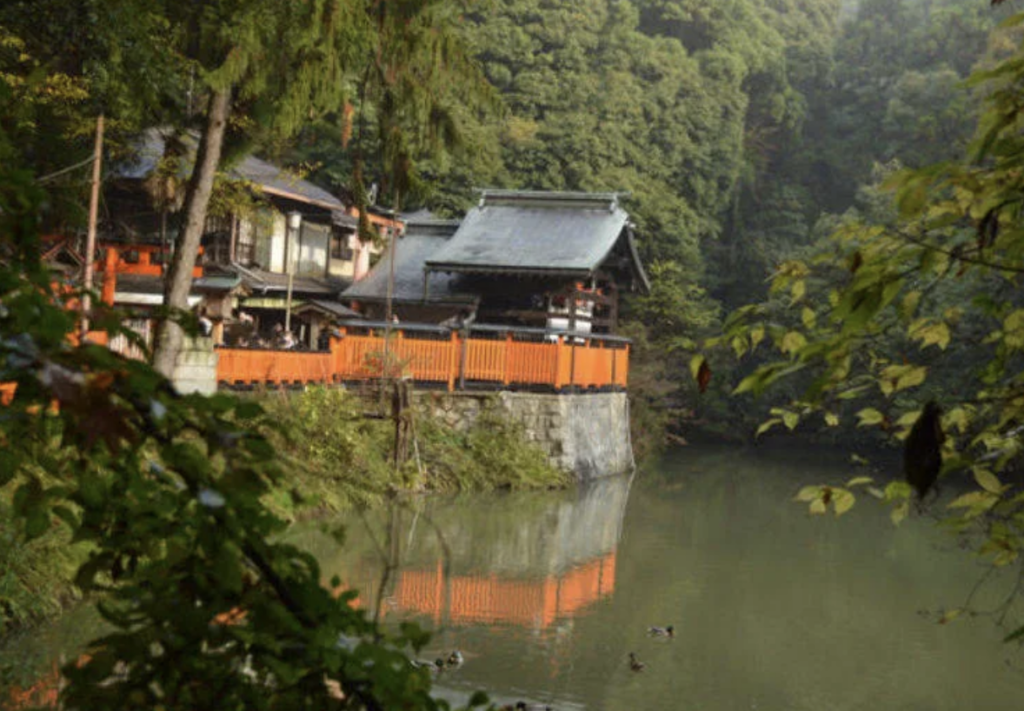
Continue up the stairs past the Inner Shrine. The crowds begin to thin significantly here. You will pass Shin-ike Pond, a serene, moss-lined body of water. The trail now transitions from stone-paved paths to a more natural, forested dirt and root trail, shaded by ancient cedar trees.
Mitsu-tsuji Intersection
You will reach a junction marked Mitsu-tsuji (Three-Way Crossroads). Crucial Navigation Tip: Go RIGHT and continue climbing. If you go straight, you will take a long, winding, and confusing detour. You will pass small, rustic teahouses where locals rest.
Yotsutsuji Viewpoint
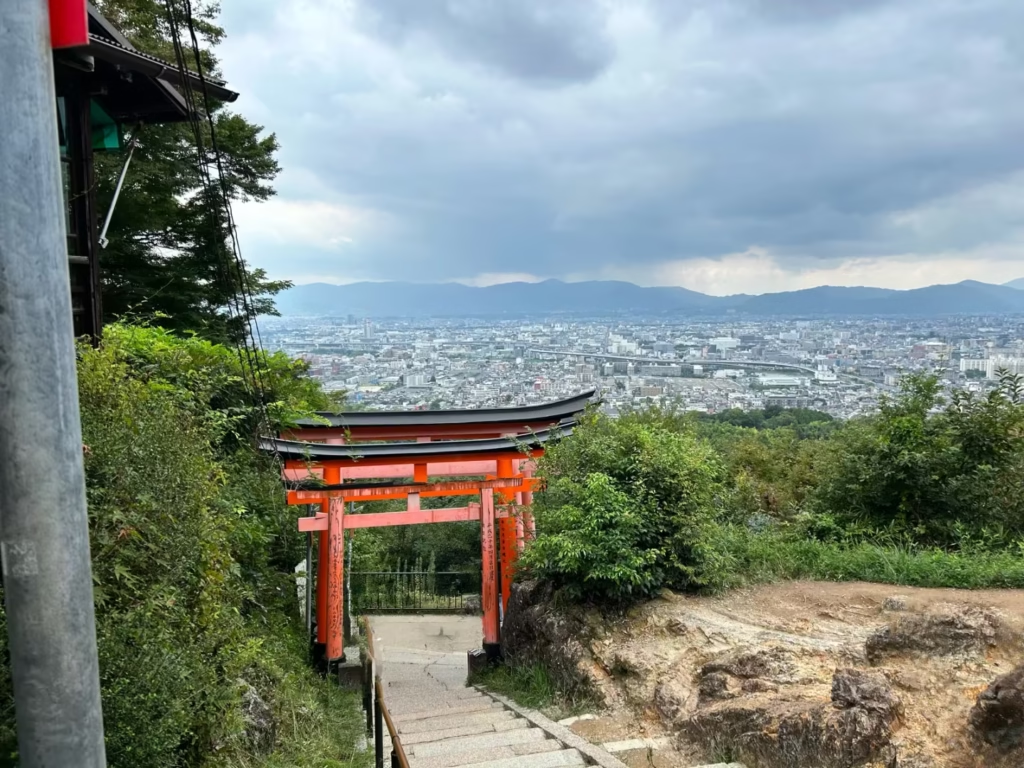
About 30 to 45 minutes from the base, you will hit Yotsutsuji (Four-Way Crossroads). This is the absolute best viewpoint on the mountain. It offers a sweeping, panoramic view of southern Kyoto stretching all the way to Osaka. There are two small teahouses here selling cold drinks, grilled skewers, and sweet treats. Take a 15-minute break to enjoy the breeze.
The Summit Shrines
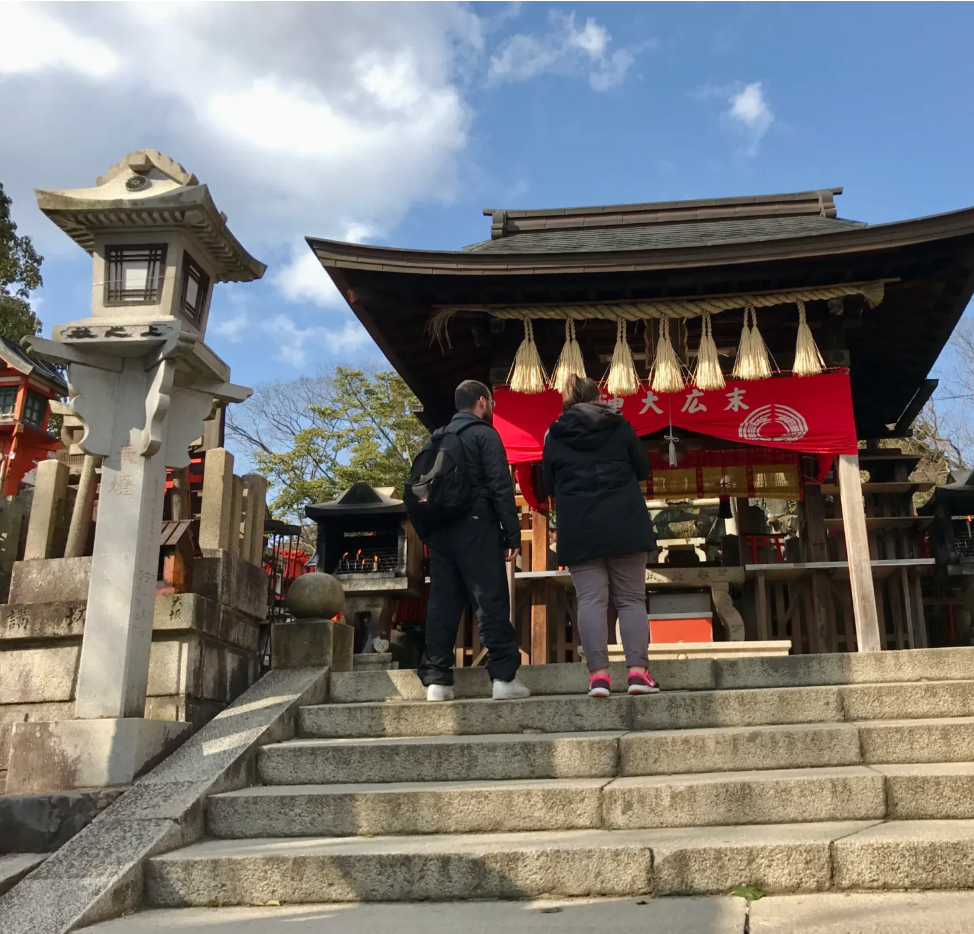
From Yotsutsuji, the trail to the peak takes another 20 minutes. You will pass three distinct sub-shrines:
- Shimo-no-Yashiro (Lower Shrine)
- Naka-no-Yashiro (Middle Shrine)
- Kami-no-Yashiro (Upper Shrine): The actual 233m summit. It is quiet, peaceful, and surrounded by dense forest. Take a moment to absorb the achievement.
The Descent & Hidden Gems
Do not just turn around! Continue straight past the summit to complete the loop.
- Mitsurugiya & Yakurikisha: You will descend to a magical, moss-covered grotto called Yakurikisha. There is a small waterfall here where ascetic monks perform Takigyo (waterfall meditation). Do not swim or wash your hands here; it is strictly for spiritual purification.
- Gozen-dani: Continue down to this shrine complex. Grab the detailed paper map here to orient yourself.
The Tricky Return Navigation
Warning: Many tourists get lost here. From Gozen-dani, continue straight on the flat path back toward Yotsutsuji. Do not take the steep downhill path that branches off; it leads to a residential neighborhood, not the shrine. Once you loop back to Mitsu-tsuji, take the LEFT (the steep, straight stairs down). When you reach the area below Shin-ike Pond, go straight to bypass the Inner Shrine and Senbon Torii, taking the direct, less-crowded route back to the Main Hall.
Best Times
Fushimi Inari is one of Japan’s most visited sites. Timing is everything.
To Avoid Crowds:
- The Golden Hour: Arrive between 6:00 AM and 7:00 AM. You will have the Senbon Torii entirely to yourself, and the morning light filtering through the gates is magical.
- The Night Hike: The shrine is lit up at night. Visiting after 8:00 PM offers a mystical, eerie, and completely crowd-free experience. Bring a flashlight for the upper trails, as lighting is minimal.
Times to Avoid:
- 10:00 AM to 3:00 PM is peak tour bus time. The lower tunnels will be shoulder-to-shoulder, making photography nearly impossible.
Street Food
Before entering the shrine, walk down Naka-Dori, the shopping street leading from the station. It is a food lover’s paradise.
- Inari Sushi: Sweet, deep-fried tofu pockets stuffed with seasoned rice. A direct tribute to the foxes’ favorite food.
- Kitsune Udon: Thick wheat noodles in a sweet dashi broth topped with fried tofu.
- Matcha Soft Serve: Creamy green tea ice cream, often served in a crispy wafer cone.
- Grilled Skewers: Look for Tsukune (chicken meatballs) and grilled quail eggs.
- Senbei: Freshly grilled rice crackers brushed with sweet soy sauce.
Pro Tips
- Footwear: Wear shoes with excellent grip. The stone steps become incredibly slippery when wet, and the descent can be hard on the knees.
- Hydration: Bring at least 500ml of water. While there are vending machines at Yotsutsuji, they are expensive and sometimes out of stock.
- Etiquette: Do not block the center of the torii tunnels. The middle of the path is considered the “divine walkway” reserved for the gods. Walk on the far left or right edges.
- Stamps: Bring a notebook! The shrine offers a Goshuin (red calligraphy stamp) book. You can collect unique stamps at the Main Hall, the Inner Shrine, and the Summit.
FAQs
1. How long does the Fushimi Inari hike take?
The full hike to the 233m summit and back down takes about 2 to 3 hours at a moderate pace. If you only want to walk through the famous Senbon Torii and return, it takes about 30 to 45 minutes.
2. Is the Fushimi Inari hike difficult?
It is rated easy to moderate. There is no technical climbing, but it involves continuous stair climbing with a 233-meter elevation gain. If you have bad knees or low stamina, you can turn around at the Yotsutsuji viewpoint (45 mins up).
3. Is there an entrance fee for Fushimi Inari?
No. Fushimi Inari Taisha is completely free to enter. There are no tickets, no admission fees, and the shrine is open 24 hours a day, 365 days a year.
4. What is the best time of day to visit?
The absolute best time is early morning, between 6:00 AM and 7:30 AM. This allows you to experience the iconic torii gates without the massive crowds. Late evening (after 7:00 PM) is also excellent for a peaceful, atmospheric night walk.
5. Can I hike Fushimi Inari at night?
Yes, the shrine never closes. The main paths and lower torii gates are beautifully illuminated at night. However, the upper trails near the summit are unlit and can be very dark, so bring a flashlight if you plan to summit after dark.
6. Which train station should I use?
Use JR Inari Station if you have a JR Pass or are coming from Kyoto Station. Use Keihan Fushimi-Inari Station if you are coming from Gion, Sanjo, or central/eastern Kyoto. Both stations are a 1-minute walk to the shrine entrance.
7. Is the trail wheelchair or stroller accessible?
Only the very bottom area (the main courtyard and Romon Gate) is paved and accessible. The famous torii gate trails and the mountain hike consist entirely of steep stone and dirt stairs, making them inaccessible for wheelchairs and strollers.
8. Are there restrooms on the mountain?
Yes. Clean, free restrooms are located near the main shrine entrance, behind the Main Hall, near the Inner Shrine, and at the Yotsutsuji viewpoint teahouses. Use them before starting the steep ascent.
9. How many torii gates are there?
There are estimated to be over 10,000 vermilion torii gates lining the 4-kilometer trail. They have been continuously donated by businesses and individuals for centuries.
10. What do the stone foxes represent?
Foxes (kitsune) are the divine messengers of Inari Okami, the god of rice and prosperity. They are not gods themselves. Look closely at their mouths; they hold a key (for the rice granary), a scroll (for wisdom), or a jewel (for spiritual energy).
11. How much does it cost to donate a torii gate?
Donating a small gate costs around ¥400,000 (approx. $2,700 USD), while large, pillar-sized gates can cost over ¥1,000,000 (approx. $6,800 USD). You can request a donation form at the shrine office.
12. What should I eat near Fushimi Inari?
Try Inari Sushi (sweet tofu pockets filled with rice), Kitsune Udon (noodles with fried tofu), and matcha-flavored desserts. The Naka-Dori shopping street leading to the shrine is packed with food stalls.
13. Is the Japan Rail (JR) Pass valid for this trip?
Yes, if you take the JR Nara Line from Kyoto Station to JR Inari Station. The JR Pass is NOT valid on the Keihan Main Line.
14. What is the Omokaru Ishi stone test?
Located behind the Inner Shrine, these are two heavy stone lantern bases. You make a wish, lift the stone, and guess its weight. If it feels lighter than you expected, your wish will come true. If it feels heavier, you must work harder to achieve it.
15. Can I run or jog the Fushimi Inari trail?
Yes, many locals run the trail early in the morning (before 7 AM). However, running during the day is highly discouraged and dangerous due to the steep stairs, narrow paths, and dense crowds of tourists.
16. Where is the best photo spot?
The best spots are the Senbon Torii tunnel (go early for no crowds), the Yotsutsuji intersection (for the panoramic view of Kyoto), and looking up the stairs from the main Romon Gate.
17. What if I get lost on the descent?
The descent can be confusing. When you reach the Gozen-dani shrine, stay on the flat, level path. Do not take the steep downhill dirt path. When you loop back to Mitsu-tsuji, take the hard left down the steep stairs.
18. Can I combine Fushimi Inari with Nara?
Yes, but it requires a full day. Take the train from Kyoto to Fushimi Inari, hike the mountain (3 hours), then take the Keihan line to Yodabashi or walk to JR Inari to catch a train to Nara (approx. 45-60 mins). Alternatively, do Fushimi Inari in the morning and explore southern Kyoto in the afternoon.
19. What does the vermilion red color mean?
In Shinto tradition, vermilion represents the sun and life force. Historically, the pigment was made from cinnabar, which was believed to ward off evil spirits and protect the wooden gates from decay.
20. Are there vending machines on the trail?
Yes, there are a few vending machines selling water, tea, and coffee. They are located near the main shrine, at the Yotsutsuji viewpoint, and near the summit. However, they are more expensive than in the city, so bring your own water.