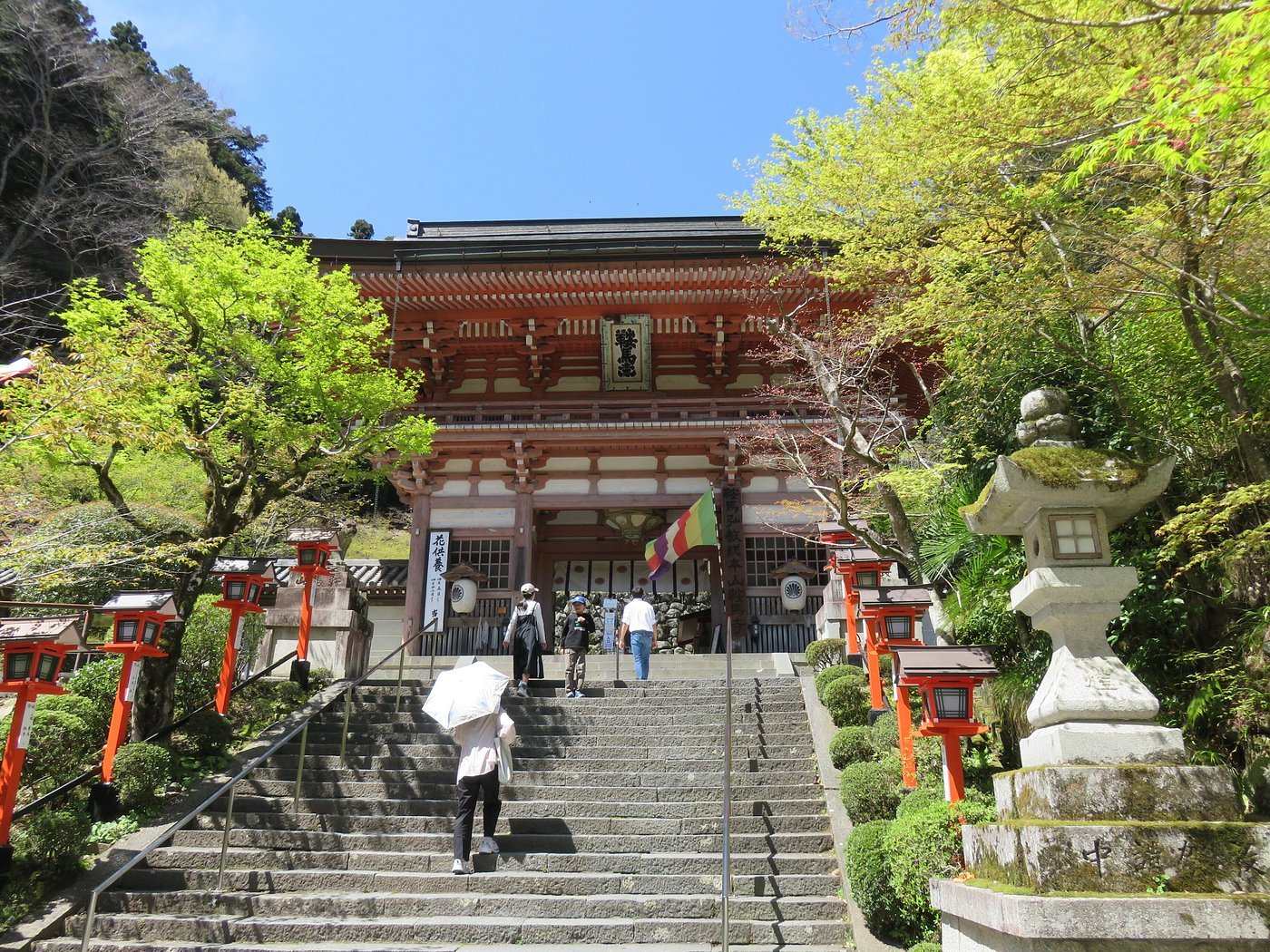
Located deep within the lush, cedar-covered peaks of the Kitayama Mountains, Kurama-dera Mountain Temple is widely considered the absolute best day trip or half-day excursion from central Kyoto. Far removed from the manicured Zen gardens and crowded city streets, this sacred mountain sanctuary offers visitors a profound connection with nature and ancient Japanese mysticism. Perched high on the shoulder of Mount Kurama, the temple is renowned not only for its rich historical legacy and esoteric Buddhist teachings but also as one of Japan’s most famous spiritual “power spots.” Whether you are seeking a rigorous forest hike, a soak in a natural mountain hot spring, or a journey into the mythical world of Tengu goblins, Kurama delivers an unforgettable, multi-sensory escape.
Quick Facts
Ideal Guests
Hikers, nature lovers, spiritual seekers, mythology enthusiasts, and travelers looking to escape the city crowds.
Top Highlights
The giant ancient cedar trees, the mythical Tengu statues, the scenic mountain hike to Kibune, and the relaxing Kurama Onsen.
Sample Pricing
Adults: ¥300 (Temple maintenance fee) | Junior high students and younger: Free
The Spiritual and Historical Significance of Mt. Kurama
The Legendary Power Spot of Kyoto
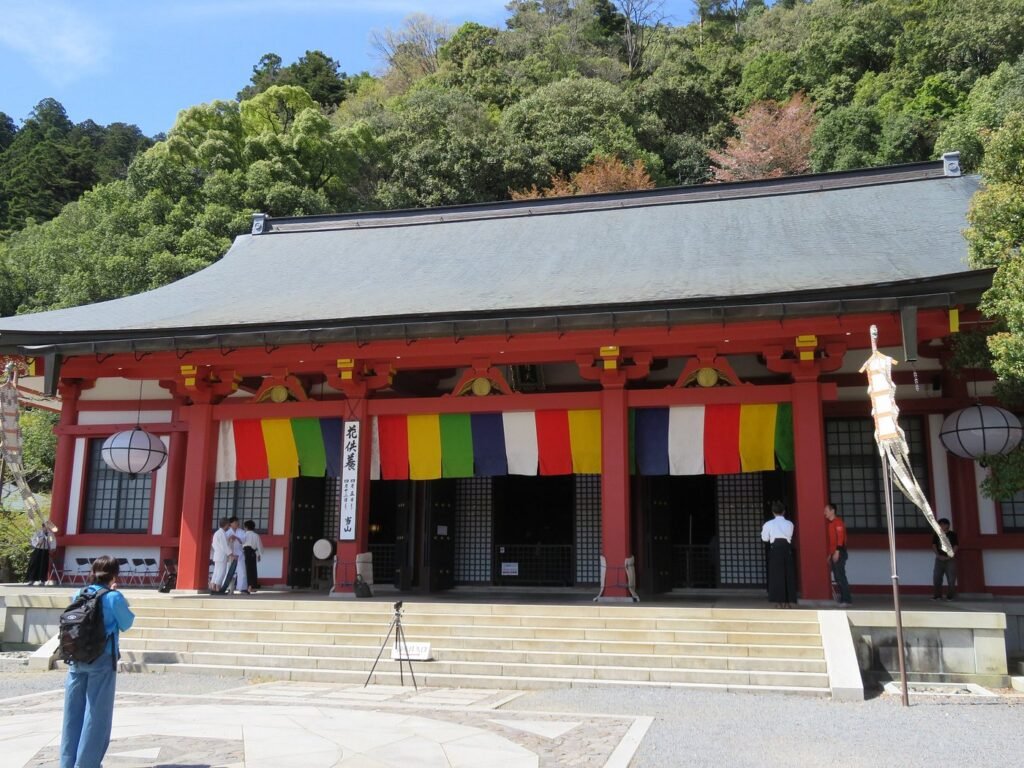
In Japanese spiritual culture, a “power spot” is a location believed to possess concentrated natural and cosmic energy. Kurama-dera is arguably the most famous power spot in the Kansai region. The temple is the head temple of its own independent Buddhist sect (Kurama-kyo), which diverges from traditional esoteric Buddhism by worshipping a unique trinity of deities known as the Sonten. This trinity represents the spiritual energy of the sun, the moon, and the earth. Visitors often stand in the main courtyard with their arms outstretched to absorb the cosmic energy radiating from the mountain peak.
Ushiwakamaru and the Tengu Legends
Mount Kurama is deeply intertwined with Japanese folklore and samurai history. According to legend, the famous 12th-century samurai Minamoto no Yoshitsune, known in his youth as Ushiwakamaru, was sent to live at the temple as a child. It is said that he sneaked out at night to the mountain’s deep forests, where he was trained in martial arts and swordsmanship by the Tengu—mythical, long-nosed goblin deities of the mountains. Today, massive, imposing statues of these red-faced, winged Tengu guard the temple grounds and the local train station, serving as the official mascots and protectors of the Kurama region.
The Kurama to Kibune Hiking Experience
The Mountain Trail and Root Paths
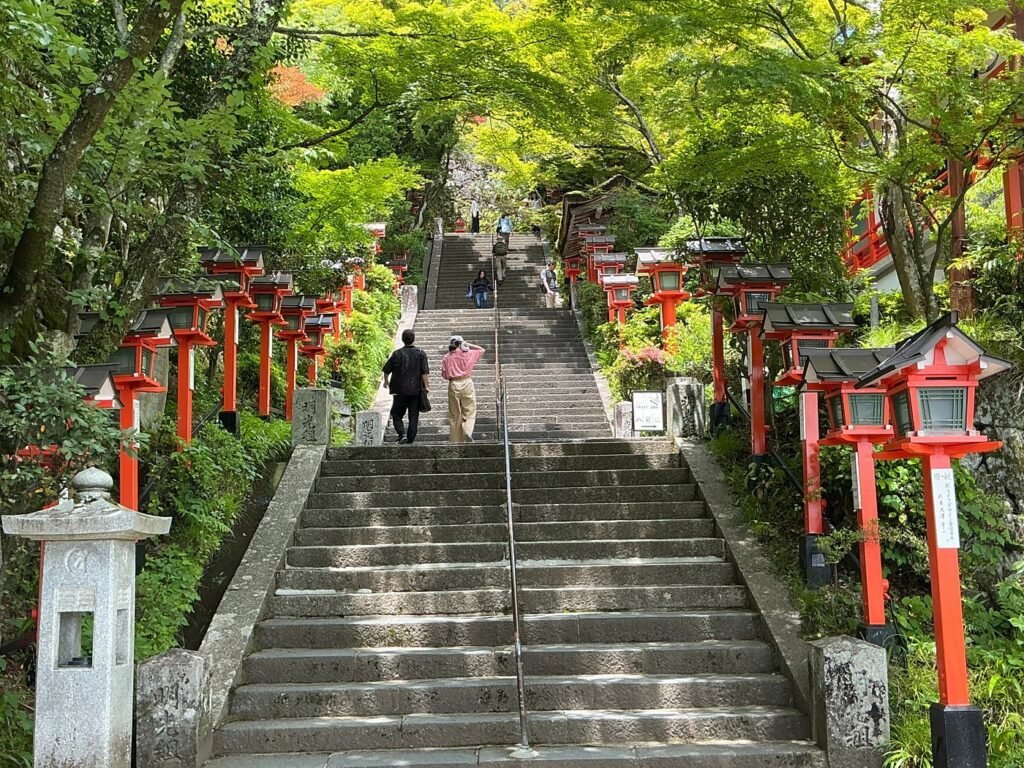
For active travelers, the physical ascent to Kurama-dera is a deeply rewarding experience. The main trail from the village of Kurama to the temple involves a steep, rigorous climb up hundreds of stone steps, winding through a primeval forest of towering, centuries-old Japanese cedar trees. For those who prefer a gentler ascent, a small funicular cable car is available to bypass the steepest sections. Beyond the main temple, the trail continues over the mountain ridge via the Ki no Ne Michi (Tree Root Path). This enchanting, undulating hiking trail features wooden boardwalks built carefully over the massive, exposed roots of ancient trees, protecting the fragile ecosystem while providing a magical, fairy-tale-like walking experience.
Descending into the Riverside Village of Kibune
The mountain trail eventually descends into the picturesque, narrow valley of Kibune, a historic riverside village famous for its traditional tea houses and high-end ryokan. Kibune is most celebrated for kawadoko, a unique summer dining tradition where restaurants build temporary wooden decks directly over the rushing, cooling waters of the Kibune River. After a long, sweaty hike over Mount Kurama, enjoying a multi-course kaiseki meal or a simple bowl of cold somen noodles while sitting inches above the flowing water is one of the most refreshing and highly sought-after culinary experiences in Kyoto.
Kurama Onsen and Local Relaxation
Soaking in the Mountain Hot Springs
No visit to the Kurama region is complete without a visit to Kurama Onsen, a modern, beautifully designed hot spring complex located just steps from the Kurama train station. The facility features expansive indoor and outdoor baths (rotenburo) fed by natural, mineral-rich geothermal waters. The outdoor baths are set against a backdrop of the lush mountain forest, allowing bathers to listen to the sounds of the river and the rustling cedar trees. It is the ultimate, culturally authentic way to soothe aching muscles after completing the steep mountain hike or the long descent into Kibune.
Getting There: The Scenic Eizan Railway
Riding the Eizan Densha from Demachiyanagi
The journey to Kurama is an attraction in itself. The area is not accessible by JR lines; instead, visitors must take the Eizan Electric Railway (Eizan Densha). The journey begins at Demachiyanagi Station in northern Kyoto, which is easily reached via the Keihan Line or city buses. The train ride takes approximately 30 minutes and is incredibly scenic. As the train leaves the urban sprawl of Kyoto, it climbs into the mountains, passing through tunnels, crossing rushing rivers, and weaving through dense, green forests. During the autumn foliage season, the railway even operates the “Kirara” train, which features large, panoramic windows specifically designed for leaf-peeping.
Essential Details
English Name
Kurama-dera Mountain Temple
Japanese Name
鞍馬寺
English Address
1074 Kurama Honmachi, Sakyo-ku, Kyoto
Japanese Address
〒601-1111 京都府京都市左京区鞍馬本町1074
Opening Hours
9:00 AM to 4:30 PM (Last entry typically 30 minutes before closing)
Admission Fee
Adults: ¥300 (Donation for mountain maintenance) | Junior high and younger: Free
Nearest Transport
2-minute walk from Kurama Station (Eizan Electric Railway)
Telephone
075-741-2003
Web Presence
No official English website (Information available via local tourism boards)
Frequently Asked Questions
What is Kurama-dera Temple famous for?
Kurama-dera is famous for being a mystical mountain temple, a renowned spiritual “power spot,” and the legendary training ground of the samurai Minamoto no Yoshitsune. It is also famous for its giant cedar trees, Tengu mythology, and the scenic hiking trail that connects it to the riverside village of Kibune.
How do I get to Kurama from Kyoto Station?
From Kyoto Station, take the Karasuma Subway Line to Imadegawa Station. From there, transfer to the Keihan Line or take a short bus/taxi ride to Demachiyanagi Station. Finally, board the Eizan Electric Railway (Eizan Densha) and ride it to its final stop, Kurama Station. The total journey takes about 50 to 60 minutes.
Is the Eizan train to Kurama covered by the JR Pass?
No, the Eizan Electric Railway is a private railway and is not covered by the Japan Rail (JR) Pass. You will need to purchase a separate ticket or use an IC card (like Suica, ICOCA, or Pasmo) to ride the train to Kurama.
How long is the hike from Kurama to Kibune?
The hike over the mountain from Kurama-dera Temple down to the village of Kibune takes approximately 1 to 1.5 hours at a moderate pace. The trail includes the famous “Tree Root Path” (Ki no Ne Michi) and involves a steady uphill climb to the ridge followed by a steep, stepped descent into the Kibune valley.
Is Kurama-dera considered a spiritual “power spot”?
Yes, Kurama-dera is widely regarded as one of the most powerful spiritual energy spots in Japan. The temple’s main courtyard features a geometric stone mandala where visitors often stand to absorb the cosmic energy of the Sonten (the trinity of deities representing the sun, moon, and earth).
Who are the Tengu of Mt. Kurama?
Tengu are mythical creatures from Japanese folklore, often depicted as red-faced, long-nosed, winged goblins who inhabit deep mountains. According to legend, the Tengu of Mount Kurama are masters of martial arts and taught swordsmanship to the young samurai Ushiwakamaru. Statues of Tengu are found throughout the village and temple grounds.
What is the admission fee for Kurama-dera?
The temple charges a ¥300 maintenance fee for adults to enter the main temple grounds. This fee was introduced to help preserve the ancient cedar forests and maintain the mountain trails. Children of junior high school age and younger enter for free.
Is there a cable car up to Kurama-dera?
Yes, there is a small funicular cable car available for visitors who do not wish to hike the steep initial steps from the village to the main temple. The cable car ride takes about 2 minutes and costs a small fee (usually around ¥200), dropping you off near the middle of the temple complex.
What are the opening hours for Kurama-dera?
The temple grounds and main halls are open daily from 9:00 AM to 4:30 PM. It is highly recommended to start your visit or hike early in the day, especially if you plan to continue over the mountain to Kibune, as the mountain trails become dark and dangerous once the sun sets.
Can I visit Kurama and Kibune in one day?
Yes, combining Kurama and Kibune is one of the most popular day-trip itineraries in Kyoto. A standard route involves taking the train to Kurama, visiting the temple, hiking over the mountain to Kibune for a riverside lunch, and then taking a local bus from Kibune back to Kibuneguchi Station to return to Kyoto.
Where is the best place to eat in Kibune?
Kibune is famous for its traditional riverside restaurants. In the summer, restaurants like Hirobun or Urafune offer kawadoko dining over the water. For a more budget-friendly option, many small cafes and tea houses along the main road serve cold somen noodles, matcha sweets, and light set meals.
What is Kurama Onsen and is it worth visiting?
Kurama Onsen is a large, modern hot spring bathhouse located right next to the Kurama train station. It is highly worth visiting, especially after a long hike. It features indoor baths, outdoor forest-view baths, and saunas, offering a perfect way to relax before catching the train back to central Kyoto.
How difficult is the hike up to Kurama-dera?
The hike from Kurama Station up to the main temple is quite steep and involves hundreds of stone steps. It takes about 30 to 45 minutes of continuous uphill walking. It is physically demanding for those not used to hiking, which is why the optional cable car is available.
Who was Ushiwakamaru and what is his connection to Kurama?
Ushiwakamaru was the childhood name of Minamoto no Yoshitsune, one of Japan’s most famous and tragic samurai heroes. As a child, he was sent to Kurama-dera to become a monk to protect him from rival clans. Legend says he trained in the mountains at night, eventually becoming a master swordsman.
What deities are worshipped at Kurama-dera?
Kurama-dera worships the Sonten, a unique trinity of deities: Bishamonten (representing the sun and light), Senju Kannon (representing the moon and mercy), and Mao-son (representing the earth and power). This specific trinity is unique to the Kurama sect of Buddhism.
What is the “Root Path” (Ki no Ne Michi)?
The Ki no Ne Michi, or Tree Root Path, is a section of the hiking trail between Kurama and Kibune. Because the ancient cedar trees have massive, exposed roots that cover the mountain surface, wooden boardwalks and steps have been built over them to protect the roots from foot traffic while providing a magical, winding path for hikers.
Can I hike Kurama in the winter?
Yes, the temple is open in winter, and the snow-covered cedar forests are incredibly beautiful. However, the mountain trail to Kibune can become icy, muddy, and very slippery. If hiking in winter, proper hiking boots with good traction and trekking poles are highly recommended.
Are there monkeys or wild animals on the Kurama trail?
While the forests of Kurama are home to wildlife such as wild boar, deer, and various bird species, Japanese macaques (snow monkeys) are not commonly seen on the main paved trails near the temple. However, hikers should always be aware of their surroundings and avoid approaching any wild animals.
Is Kurama-dera wheelchair accessible?
Unfortunately, Kurama-dera is not wheelchair accessible. The approach from the village is very steep, and the temple grounds feature numerous stone steps, gravel paths, and high wooden thresholds. The cable car also requires navigating stairs to access the boarding area.
What is the Ushiwakamaru festival at Kurama?
Held annually on the second Sunday of October, the Ushiwakamaru Festival celebrates the legendary youth of Minamoto no Yoshitsune. The festival features a grand procession where locals dress in Heian-period samurai armor and traditional garments, parading through the village from the train station up to the temple.