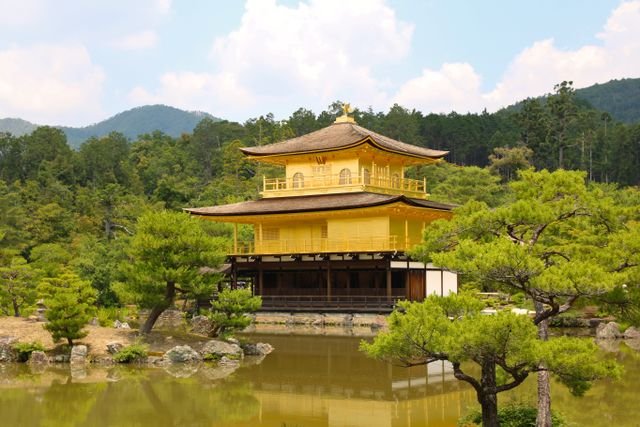
Kinkaku-ji, universally renowned as the Golden Pavilion, is undeniably Kyoto’s most iconic and visually spectacular sight. As a designated UNESCO World Heritage site, this breathtaking Zen temple represents the extravagant Kitayama culture of the wealthy aristocracy during the Muromachi period. The top two floors of the main hall are completely covered in brilliant gold leaf, making it shimmer magnificently against the backdrop of the meticulously landscaped gardens and the mirror-like Kyoko-chi (Reflecting Pond). While it is an absolute must-visit destination on any Kyoto travel itinerary, its immense popularity means it draws massive crowds year-round. Strategic planning regarding the time of day and season of visit is highly recommended to fully appreciate the serene beauty of this architectural masterpiece.
Quick Facts
Ideal Guests
First-time visitors to Kyoto, photography enthusiasts, history lovers, and architecture aficionados.
Top Highlights
The stunning gold-leaf exterior, the pristine Kyoko-chi reflecting pond, the unique calligraphy admission ticket, and the golden phoenix atop the roof.
Sample Pricing
Adults: ¥500 | Junior High and Elementary School Students: ¥300
Architectural Brilliance and Historical Significance
A Masterpiece of Three Architectural Styles
Originally constructed in 1397 as a retirement villa for the powerful shogun Ashikaga Yoshimitsu, the property was converted into a Zen temple of the Rinzai sect following his death. The main hall, officially named Rokuon-ji (Deer Garden Temple), is an architectural marvel because each of its three floors utilizes a completely different architectural style.
- The First Floor (Hosui-in): Built in the Shinden-zukuri style of the Heian period, featuring natural wood and white plaster.
- The Second Floor (Chao-on-do): Constructed in the Bukke-zukuri style of the samurai class, entirely covered in gold leaf.
- The Third Floor (Kukkyo-cho): Designed in the traditional Chinese Zen-sho-zukuri style, also covered in brilliant gold leaf and topped with a majestic golden phoenix.
The Tragic History and Reconstruction
The current structure is actually a faithful reconstruction. In 1950, a young novice monk, driven by an obsession with the temple’s beauty and post-war despair, set fire to the original building, completely burning it to the ground. This historical event famously inspired Yukio Mishima’s novel The Temple of the Golden Pavilion. The current pavilion was meticulously rebuilt in 1955, and the gold leaf was reapplied in a much thicker layer in 1987 to restore its original, dazzling splendor.
The Gardens and Reflecting Pond
The Kyoko-chi (Reflecting Pond)
The visual impact of Kinkaku-ji is inextricably linked to the Kyoko-chi, the large, serene pond situated in front of the pavilion. The pond was designed to reflect the golden structure perfectly, creating a mesmerizing double image. The placement of the islands and stones in the pond is deeply symbolic, representing the Buddhist cosmology of the ocean and the islands of the blessed.
Seasonal Beauty and the Magic of Snow
The surrounding strolling gardens are breathtaking in every season. In spring, the contrast of vibrant green pines and cherry blossoms against the gold is striking. In autumn, the fiery red maple leaves frame the pavilion beautifully. However, the absolute pinnacle of Kinkaku-ji’s visual appeal occurs during the rare winter snowfalls. When the golden pavilion and the surrounding pine trees are dusted with a layer of pristine white snow, it creates an otherworldly, magical landscape that is considered one of the most spectacular sights in all of Japan.
Navigating the Crowds: Strategic Visiting Tips
Best Times to Visit
Because Kinkaku-ji is one of the most famous landmarks in Japan, it is perpetually crowded. To experience the temple in relative peace, timing is everything.
- Arrive Early: The temple opens at 9:00 AM. Arriving 15 to 20 minutes before opening ensures you are among the first to enter, allowing for unobstructed photographs of the reflecting pond before the tour buses arrive.
- Late Afternoon: Visiting an hour before closing time (around 4:00 PM) is another excellent strategy, as the morning crowds have dispersed and the afternoon light casts a warm, golden glow on the pavilion.
- Weekday Mornings: If possible, schedule your visit for a Monday or Tuesday morning.
- Avoid Holidays: Strictly avoid visiting on Japanese national holidays, weekends, and the peak weeks of cherry blossom (early April) and autumn foliage (late November) seasons, as the sheer volume of visitors makes navigating the paths extremely difficult.
Essential Details
English Name
Kinkaku-ji Temple (The Golden Pavilion)
Japanese Name
金閣寺 (Rokuon-ji)
English Address
1 Kinkaku-ji-cho, Kita-ku, Kyoto
Japanese Address
〒603-8361 京都府京都市北区金閣寺町1
Opening Hours
9:00 AM to 5:00 PM daily
Admission Fee
Adults: ¥500 | Junior High and Elementary Students: ¥300
Nearest Transport
Kyoto City Bus 100, 101, or 205 from Kyoto Station to the “Kinkakuji Michi” bus stop, followed by a short walk.
Telephone
075-461-0013
Web Presence
Official Website (English available)
Frequently Asked Questions
What is Kinkaku-ji Temple?
Kinkaku-ji, officially known as Rokuon-ji, is a Zen Buddhist temple in Northwest Kyoto. It is most famous for its main hall, the Golden Pavilion, which is covered in brilliant gold leaf. It is a UNESCO World Heritage site and one of the most popular tourist attractions in Japan.
Why is Kinkaku-ji called the Golden Pavilion?
The temple is called Kinkaku-ji, which literally translates to “Temple of the Golden Pavilion.” This name is derived from the main hall (the Shariden), whose top two floors are completely covered in shimmering gold leaf, making it look like a pavilion made of solid gold.
How much gold is actually used on the Golden Pavilion?
The top two floors of the pavilion are covered in pure gold leaf. During the last major restoration in 1987, the gold leaf was replaced and applied in a layer that is reported to be five times thicker than the original gold leaf used in the 14th century.
Is Kinkaku-ji a UNESCO World Heritage site?
Yes, Kinkaku-ji was designated as a UNESCO World Heritage site in 1994. It is included as a vital part of the “Historic Monuments of Ancient Kyoto” collection, recognized for its profound historical significance and its representation of Muromachi-period aristocratic culture.
What are the opening hours for Kinkaku-ji Temple?
Kinkaku-ji is open every single day of the year from 9:00 AM to 5:00 PM. There are no closing days, making it a reliable destination regardless of when you visit Kyoto.
How much does it cost to enter Kinkaku-ji?
The admission fee is ¥500 for adults and ¥300 for junior high and elementary school students. The ticket itself is a unique feature, as it is a beautifully designed paper talisman (o-mamori) featuring Buddhist calligraphy, meant to bring good luck and ward off evil.
How do I get to Kinkaku-ji from Kyoto Station?
The most direct and popular route is to take the Kyoto City Bus. From Kyoto Station, board Bus 101 or 205. The ride takes about 30 to 40 minutes, and you should disembark at the “Kinkakuji Michi” bus stop. From the bus stop, it is a pleasant 3 to 5-minute walk to the temple entrance.
What is the best time of day to visit Kinkaku-ji to avoid crowds?
The absolute best time to visit is right at 9:00 AM when the gates open, or late in the afternoon around 4:00 PM. Arriving at opening time allows you to see the reflecting pond before the massive tour buses arrive. It is also highly recommended to visit on a weekday, preferably a Monday or Tuesday.
Can visitors go inside the Golden Pavilion building?
No, visitors are not allowed to enter the actual Golden Pavilion building. The interior is not open to the public, and the building is viewed from across the Kyoko-chi (Reflecting Pond). Visitors can, however, walk through the surrounding gardens and view the pavilion from multiple angles.
What is the architectural significance of the three floors?
Each floor of the Golden Pavilion represents a different architectural style. The first floor is built in the Heian-period Shinden style, the second floor in the samurai-class Bukke style, and the third floor in the traditional Chinese Zen style. This unique combination symbolizes the blending of aristocratic, samurai, and Zen Buddhist cultures.
Is Kinkaku-ji beautiful when it snows?
Yes, a snow-covered Kinkaku-ji is widely considered one of the most breathtaking and magical sights in all of Japan. The contrast of the brilliant gold leaf, the white snow, and the dark green pine trees creates a stunning visual masterpiece. However, heavy snow is relatively rare in Kyoto, occurring only a few days a year.
How much time is needed to explore Kinkaku-ji?
A standard visit to Kinkaku-ji takes about 45 minutes to 1 hour. This allows ample time to walk the garden paths, view the Golden Pavilion from various vantage points, admire the reflecting pond, and visit the small tea house and souvenir shop.
What is the name and significance of the reflecting pond?
The pond in front of the Golden Pavilion is called Kyoko-chi, which translates to “Mirror Pond.” It was designed to reflect the golden pavilion perfectly. The pond also features islands and stones arranged to represent Buddhist cosmology, symbolizing the ocean and the islands of the blessed.
What other attractions are located near Kinkaku-ji?
Kinkaku-ji is located in Northwest Kyoto, which is home to several other incredible sites. Nearby attractions include Ryoan-ji (famous for its rock garden), Ninna-ji (a UNESCO World Heritage temple with beautiful cherry trees), and the Kitano Tenmangu Shrine.
Is Kinkaku-ji Temple wheelchair accessible?
Yes, Kinkaku-ji is largely wheelchair accessible. The main paths leading from the entrance to the viewing areas around the reflecting pond are paved and relatively flat. Wheelchairs are available to borrow at the entrance free of charge, though they are subject to availability.
What is the unique admission ticket at Kinkaku-ji?
Unlike standard paper tickets, the admission ticket at Kinkaku-ji is a beautiful, folded paper talisman called an o-mamori. It features elegant Buddhist calligraphy and is designed to be kept as a good luck charm to protect the home and bring peace to the family.
Why was the original Golden Pavilion burned down in 1950?
In 1950, a 21-year-old novice monk set fire to the original Golden Pavilion. The monk was reportedly suffering from mental illness and was driven by a complex mix of post-war despair and an obsessive, twisted desire to preserve the temple’s absolute beauty before it could be corrupted by time. The current structure is a 1955 reconstruction.
What is the golden bird on the roof of the pavilion?
The golden bird perched atop the roof of the third floor is a phoenix (ho-o). In East Asian mythology, the phoenix is a legendary bird that symbolizes virtue, grace, and the harmonious union of yin and yang. It is also a symbol of the imperial household and high spiritual power.
Is there a dress code for visiting Kinkaku-ji?
There is no strict dress code, but modest and respectful clothing is recommended, as it is an active religious site. The most important rule is to wear comfortable walking shoes, as you will be walking on gravel paths and stepping over wooden thresholds in some of the garden structures.
Can I take photographs at Kinkaku-ji Temple?
Yes, photography is highly encouraged in the outdoor garden areas, and the reflecting pond offers the perfect vantage point for capturing the Golden Pavilion. However, photography and video recording are strictly prohibited inside the indoor exhibition halls and the Abbot’s Chamber (Shoin) to protect the delicate artifacts and respect the sacred space.