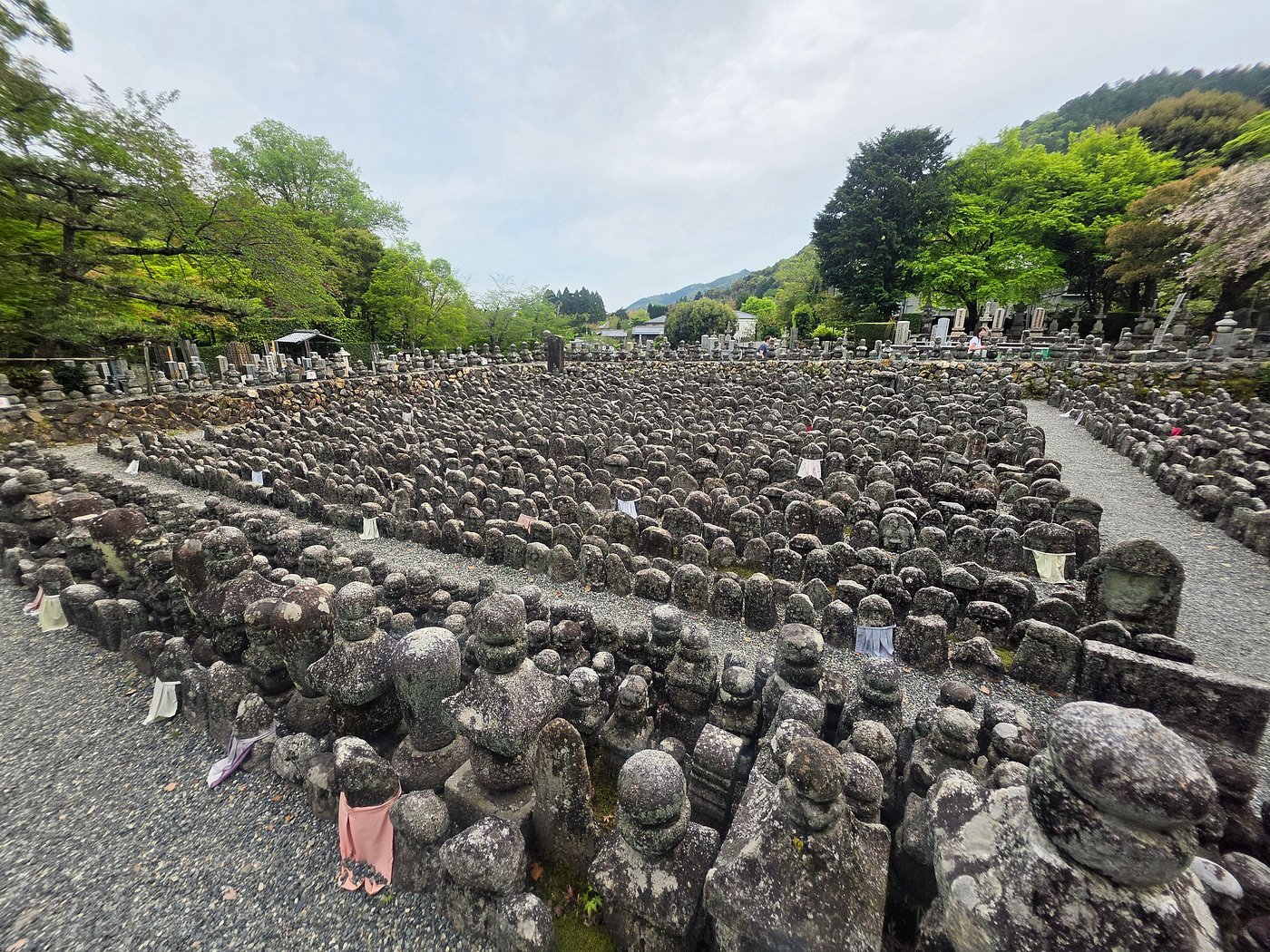
Located away at the scenic, mountainous far end of the Arashiyama sightseeing district, Adashino-Nembutsu-ji Temple is one of Kyoto’s most poignant and visually striking hidden gems. Far removed from the bustling crowds of the main bamboo groves, this ethereal spiritual sanctuary is dedicated to the repose of the muen-botoke—the souls of those who passed away without family or kin to remember them. The temple grounds are home to a breathtaking, moss-covered hillside adorned with over 8,000 stone statues and stupas, creating a hauntingly beautiful landscape that serves as a profound testament to Buddhist compassion. For travelers seeking an off-the-beaten-path Kyoto experience, this temple offers a deeply moving and tranquil retreat.
Quick Facts
Ideal Guests
Spiritual seekers, photography enthusiasts, history lovers, and travelers looking to escape the heavy tourist crowds of central Arashiyama.
Top Highlights
Over 8,000 moss-covered stone statues, the vibrant moss garden, the adjacent quiet bamboo grove, and the magical Sentō-kuyō summer candlelight festival.
Sample Pricing
Adults: ¥500 | High and Junior High School Students: ¥400 | Elementary School and Under: Free
Historical Significance and Spiritual Purpose
Honoring the Muen-Botoke
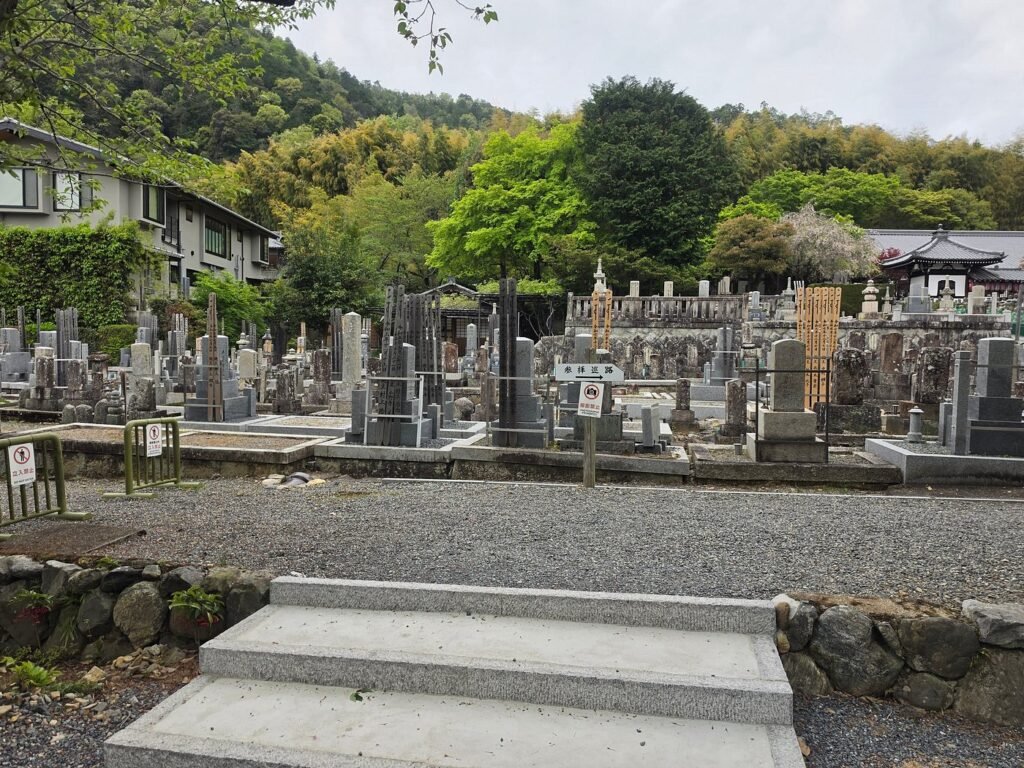
The core spiritual mission of Adashino-Nembutsu-ji is to memorialize the muen-botoke, a Japanese Buddhist concept referring to the spirits of individuals who died without relatives to pray for their salvation or maintain their graves. In ancient times, this remote mountainous area of Adashino was used as a burial ground where bodies were left exposed to the elements (a practice known as sky burial). To ensure these forgotten souls were not left to wander in spiritual limbo, the temple was established to chant the nembutsu (sacred Buddhist prayers) and provide a permanent resting place for their memory.
The Sea of 8,000 Stone Statues
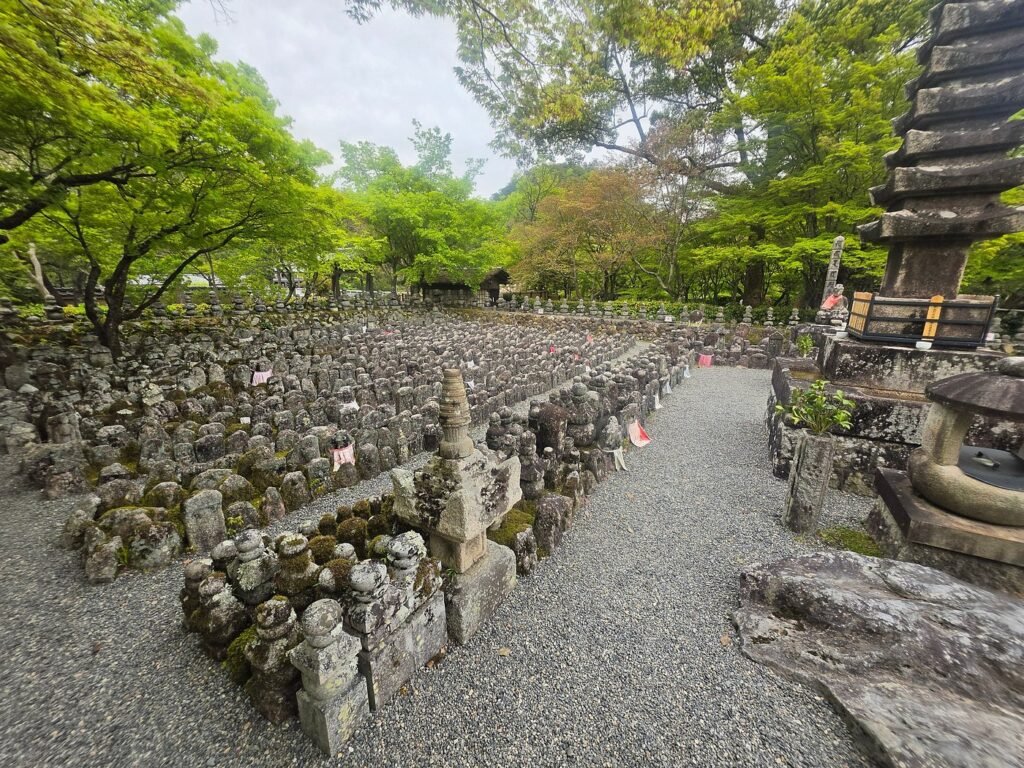
While the temple’s origins date back to the 9th century and are attributed to the legendary monk Kukai (Kobo Daishi), the iconic visual landscape we see today was created much later. In the late 19th century (Meiji period), a dedicated monk named Shokai Shonin discovered thousands of abandoned, weather-beaten stone markers and gravestones scattered across the hillsides. He meticulously gathered and arranged over 8,000 of these stone stupas and Jizo statues on the temple grounds. Today, these statues stand shoulder-to-shoulder, covered in vibrant green moss, creating a visually stunning and deeply emotional sea of stone that honors the forgotten dead.
The Exquisite Grounds and Natural Beauty
The Lush Moss Garden and Bamboo Groves
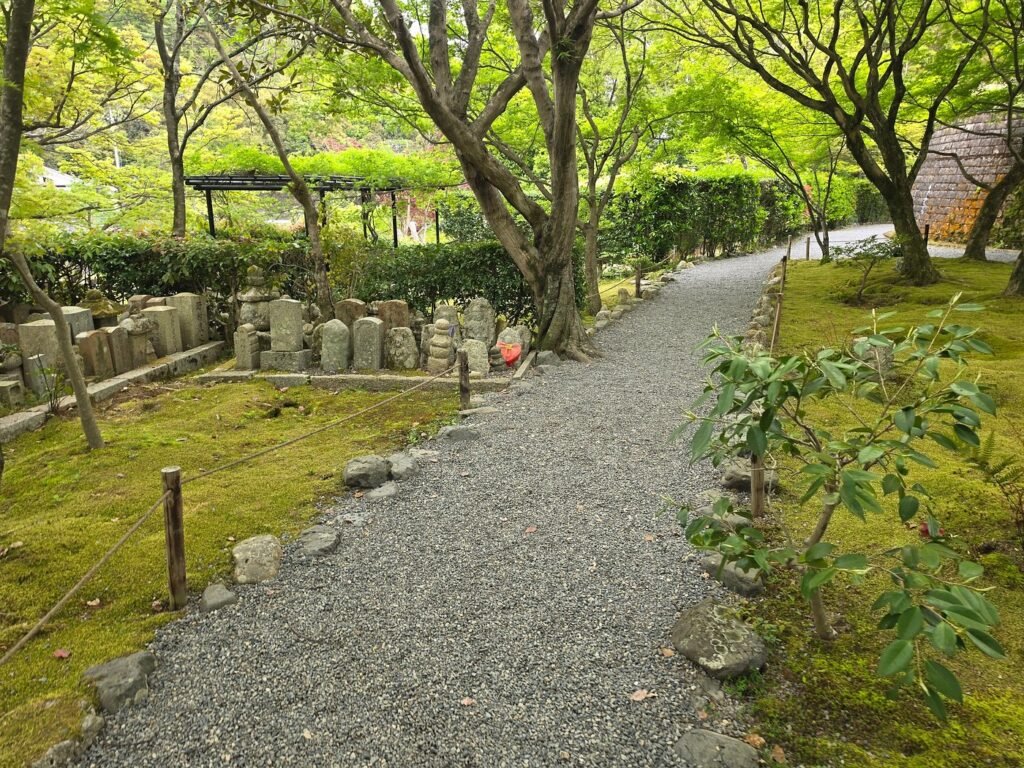
The physical grounds of Adashino-Nembutsu-ji are a masterclass in integrating architecture with nature. The temple features both an upper and a lower garden, both of which are heavily blanketed in lush, velvety moss. The contrast between the weathered, gray stone statues and the brilliant green moss is particularly breathtaking after a light rain.
The Adjacent Adashino Bamboo Forest
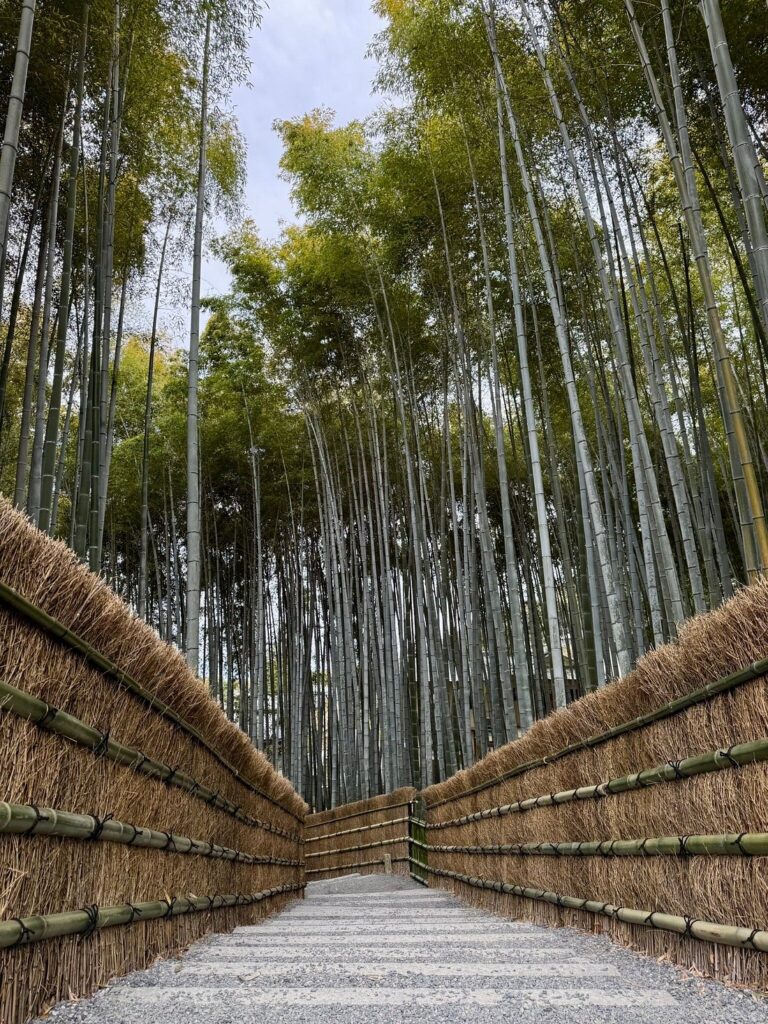
Winding through the upper sections of the temple grounds is a beautiful, serene bamboo grove. While it is much smaller than the famous Arashiyama Bamboo Grove, it offers the exact same towering, shaded atmosphere and rustling acoustic experience, completely devoid of the massive crowds found in the city center.
The Saga-Toriimoto Preserved Streetscape
The journey to the temple is an experience in itself. Adashino-Nembutsu-ji sits at the western terminus of the Saga-Toriimoto preserved street. This historic, narrow lane is lined with traditional yaekaki (woven wooden fences) and beautifully restored machiya (wooden townhouses). Walking down this atmospheric street, with its traditional tea houses and quiet ambiance, feels like stepping back into the Edo period, perfectly setting the mood before you arrive at the temple gates.
The Magical Sentō-kuyō Candlelight Festival
Illuminating the Spirits in August
If there is one time of year when Adashino-Nembutsu-ji transcends from beautiful to truly otherworldly, it is during the annual Sentō-kuyō memorial service. Held on the evenings of August 23rd and 24th, this atmospheric festival honors the spirits of the dead as the season transitions from summer to autumn. During these two nights, over 8,000 candles are meticulously placed among the stone statues and along the mossy paths. The flickering candlelight illuminates the faces of the Jizo statues and casts a warm, magical glow over the entire hillside, creating one of the most spectacular and spiritual night events in all of Kyoto.
Practical Information and Access
Navigating the Journey to Adashiyama
Because the temple is located at the far western edge of the Arashiyama district, it requires a bit of a trek. The most scenic route is to walk the 40-minute path from central Arashiyama, passing through the Saga-Toriimoto preserved streets. However, for those short on time or energy, taking a taxi or the local Kyoto City Bus from Arashiyama Station is highly recommended. The bus ride takes only about 10 minutes and drops you just a short walk from the temple entrance.
Essential Details
English Name
Adashino-Nembutsu-ji Temple
Japanese Name
化野念仏寺
English Address
17 Adashino-cho, Sagatoriimoto, Ukyo-ku, Kyoto
Japanese Address
〒616-8423 京都府京都市右京区嵯峨鳥居本化野町17
Opening Hours
9:00 AM to 4:30 PM (March to November) | 9:00 AM to 3:30 PM (December to February)
Admission Fee
Adults: ¥500 | High/Junior High: ¥400 | Elementary & Under: Free
Nearest Transport
40-min walk from Arashiyama Station, or a short bus/taxi ride.
Telephone
075-861-2221
Web Presence
Official Website (English available)
Frequently Asked Questions
What is Adashino-Nembutsu-ji Temple famous for?
Adashino-Nembutsu-ji is most famous for its hauntingly beautiful hillside garden containing over 8,000 moss-covered stone statues and stupas. These statues are dedicated to the muen-botoke, the spirits of people who died without family to remember or pray for them.
How many stone statues are located at Adashino-Nembutsu-ji?
There are approximately 8,000 stone statues, gravestones, and stupas scattered across the mossy grounds of the temple. They were gathered from abandoned graves across the region and carefully arranged by a monk in the late 19th century.
What does the name Adashino-Nembutsu-ji mean?
“Adashino” is the historical name of the region where the temple is located. “Nembutsu” refers to the chanting of the name of Amida Buddha, a core practice in Pure Land Buddhism used to help spirits reach the afterlife. “Ji” simply means temple. Thus, it translates to the Adashino Temple for Chanting to the Buddha.
Who are the 8,000 statues dedicated to?
The statues are dedicated to the muen-botoke, a Japanese Buddhist concept referring to the souls of individuals who passed away without any living relatives or kin to maintain their graves or chant prayers for their peaceful transition to the afterlife.
When is the best time of year to visit Adashino-Nembutsu-ji?
The temple is beautiful year-round, but the best times to visit are during the rainy season (June to July) when the moss is incredibly vibrant and green, or in autumn (November) when the surrounding maple trees turn brilliant shades of red and gold.
What is the Sentō-kuyō candlelight festival?
The Sentō-kuyō is a deeply atmospheric memorial service held on the evenings of August 23rd and 24th. During this event, 8,000 candles are lit and placed among the stone statues, illuminating the mossy hillside in a magical, ethereal glow to comfort the spirits of the dead.
How do I get to Adashino-Nembutsu-ji from central Arashiyama?
You can walk from central Arashiyama (near the Togetsukyo Bridge) to the temple in about 40 minutes, passing through the scenic Saga-Toriimoto preserved street. Alternatively, you can take Kyoto City Bus #28 or #92 from Arashiyama Station, which takes about 10 minutes, or take a quick ¥1,000 taxi ride.
Is there a bamboo grove near Adashino-Nembutsu-ji?
Yes, the temple grounds feature a beautiful, quiet bamboo grove. While it is smaller than the main Arashiyama Bamboo Grove, it offers a similarly serene and shaded walking experience, completely free of the heavy tourist crowds.
How long does it take to explore Adashino-Nembutsu-ji?
A standard visit to explore the main halls, walk through the upper and lower moss gardens, and view the 8,000 stone statues takes about 45 minutes to 1 hour.
What is the Saga-Toriimoto preserved street?
Saga-Toriimoto is a beautifully preserved historic street that leads directly to Adashino-Nembutsu-ji. It is lined with traditional wooden yaekaki fences, historic machiya townhouses, and old tea houses, offering a glimpse into what rural Kyoto looked like centuries ago.
Are there moss gardens at Adashino-Nembutsu-ji?
Yes, the temple is renowned for its lush, vibrant moss gardens. The moss grows thick over the ground and covers the majority of the 8,000 stone statues, creating a striking visual contrast between the weathered gray stone and the brilliant green moss.
Is Adashino-Nembutsu-ji crowded with tourists?
No, it is significantly less crowded than the main attractions in Arashiyama. Because it is located at the far end of the district and requires a bit of a walk or a bus ride, it remains a peaceful, tranquil sanctuary where you can enjoy the scenery without fighting through massive crowds.
What is the admission fee for Adashino-Nembutsu-ji?
The admission fee is ¥500 for adults, ¥400 for high school and junior high school students, and free for elementary school students and younger children.
What are the opening hours of the temple?
From March to November, the temple is open from 9:00 AM to 4:30 PM. During the winter months (December to February), the hours are slightly reduced, closing at 3:30 PM. The last entry is 30 minutes before closing.
Can I combine Adashino-Nembutsu-ji with Otagi Nenbutsu-ji in one trip?
Yes, absolutely. Both temples are located at the far western end of the Arashiyama district, just a 10 to 15-minute walk from each other. Many visitors hike up to Adashino-Nembutsu-ji and then walk over to Otagi Nenbutsu-ji to see its 1,200 quirky stone figures in a single trip.
What is a “muen-botoke”?
A muen-botoke refers to the spirits of the dead who have no living relatives (muen) to pray for them or maintain their graves. In Japanese Buddhist tradition, it is believed that without these prayers, the spirits may suffer or become restless, which is why temples like Adashino-Nembutsu-ji exist to chant for their salvation.
Who originally founded Adashino-Nembutsu-ji Temple?
The temple’s origins date back to the early 9th century and are traditionally attributed to the legendary Buddhist monk Kukai (also known as Kobo Daishi). However, the current arrangement of the 8,000 stone statues was organized by the monk Shokai Shonin in the late 19th century.
Is Adashino-Nembutsu-ji wheelchair accessible?
Unfortunately, the temple is not very wheelchair accessible. The grounds are situated on a hillside, and the paths consist of uneven stone steps, steep inclines, and slippery mossy areas. Navigating the upper garden with a wheelchair or a standard stroller is highly difficult.
What should I wear when visiting Adashino-Nembutsu-ji?
You should wear comfortable, closed-toe walking shoes with good grip, as the stone paths and mossy steps can be slippery, especially after rain. Dress modestly and respectfully, as it is an active and sacred Buddhist burial site.
Are there restaurants or cafes near the temple?
Yes, the Saga-Toriimoto preserved street leading to the temple features a few traditional cafes, tea houses, and small restaurants. Places like the historic Kakuden offer a chance to rest and enjoy traditional Japanese sweets or a light meal in a beautiful, historic setting after your temple visit.