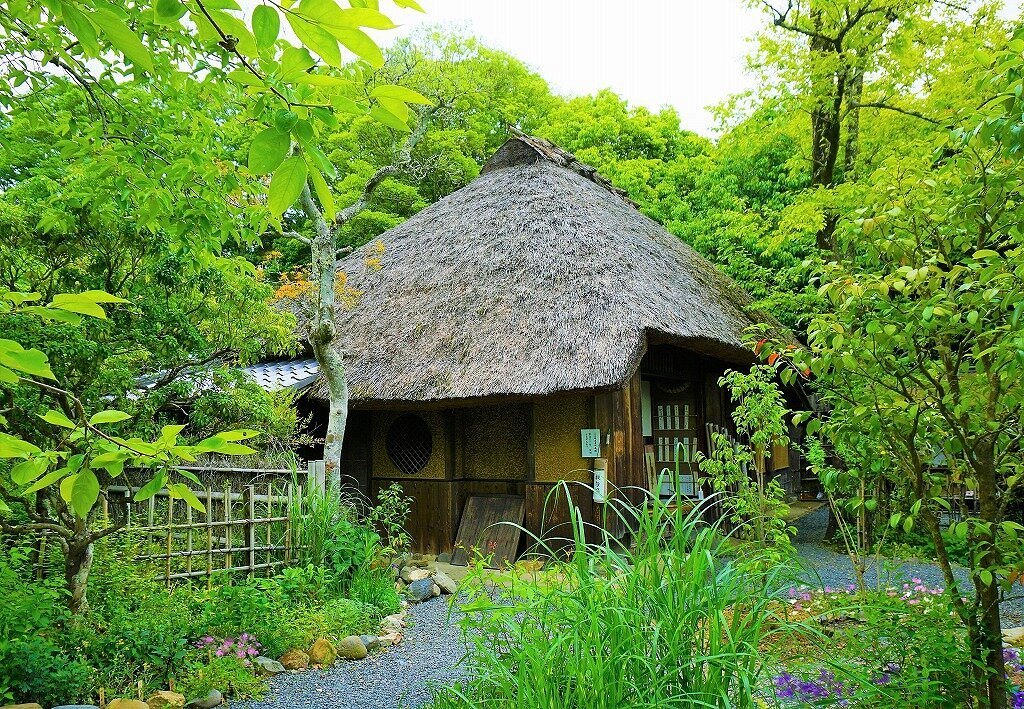
A Retreat in the Saga-Arashiyama District
Rakushisha, affectionately known as the Poet’s Hut, is a quaint, thatched-roof hermitage that stands as one of Kyoto’s most intimate and culturally significant hidden gems. Nestled in the serene, rural outskirts of the Saga-Arashiyama district, this rustic cottage offers a profound sense of tranquility and traditional Japanese simplicity. For travelers seeking a peaceful, off-the-beaten-path experience, Rakushisha serves as a perfect cultural palate cleanser between visits to the area’s larger, more heavily crowded temples and shrines.
The Legacy of Matsuo Basho and Mukai Kyorai
This historic literary sanctuary is inextricably linked to Matsuo Basho, the most famous haiku master in Japanese history. While it is a common misconception that Basho lived here, the hut was actually the primary residence of Mukai Kyorai, one of Basho’s most devoted and talented disciples. Basho frequently visited his disciple at this rustic retreat, and it is said that the great poet stayed here for a period, drawing immense inspiration from the quiet, natural surroundings of the Saga countryside.
Quick Facts
Ideal Guests and Top Highlights
Rakushisha is highly recommended for literature enthusiasts, haiku lovers, history buffs, and travelers looking to escape the bustling tourist crowds of central Arashiyama. Top highlights include the beautifully preserved thatched-roof cottage, the serene persimmon orchard, the traditional wooden fencing, and the deep, palpable connection to Japan’s rich Edo-period literary history.
The History and Meaning of Rakushisha
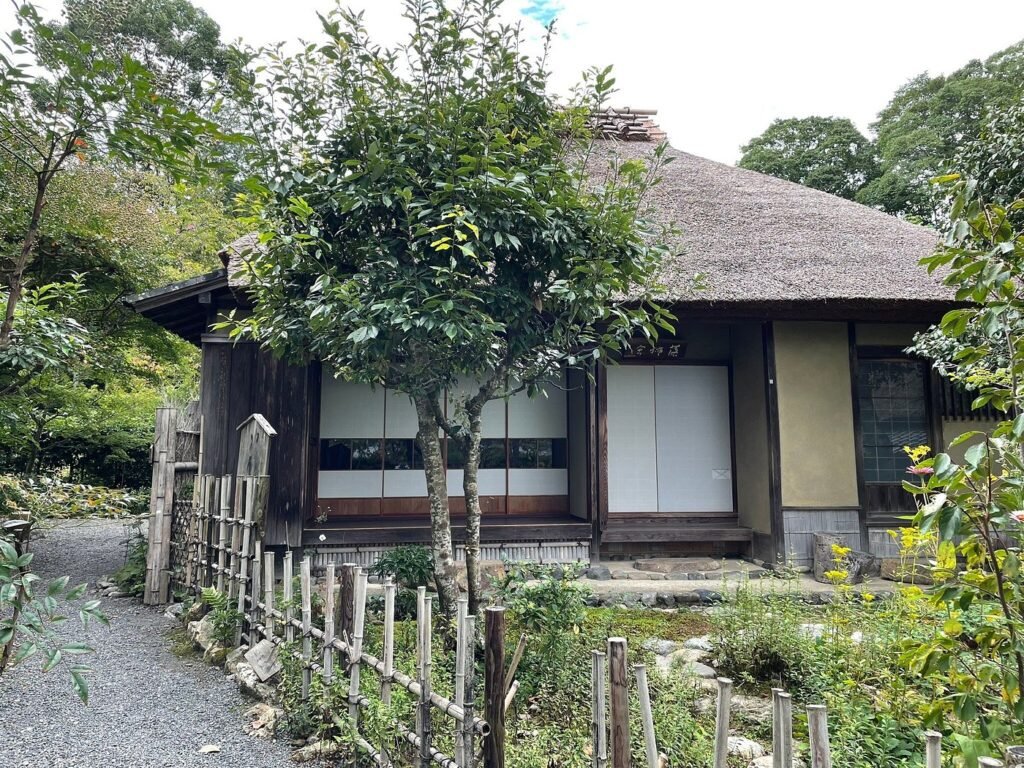
The Origin of the “Hut of Fallen Persimmons”
The name “Rakushisha” translates poetically to the “Hut of Fallen Persimmons” (Rakushi meaning fallen persimmons, and Sha meaning hut). According to local legend, the cottage was surrounded by a lush orchard of persimmon trees. One year, a fierce typhoon swept through the Saga district, blowing the thatched roof off the cottage and stripping the trees of their fruit. The ground and the interior of the hut were left completely covered in fallen persimmons, inspiring Kyorai to name his beloved home Rakushisha in honor of this striking natural event.
Exploring the Thatched-Roof Cottage and Grounds
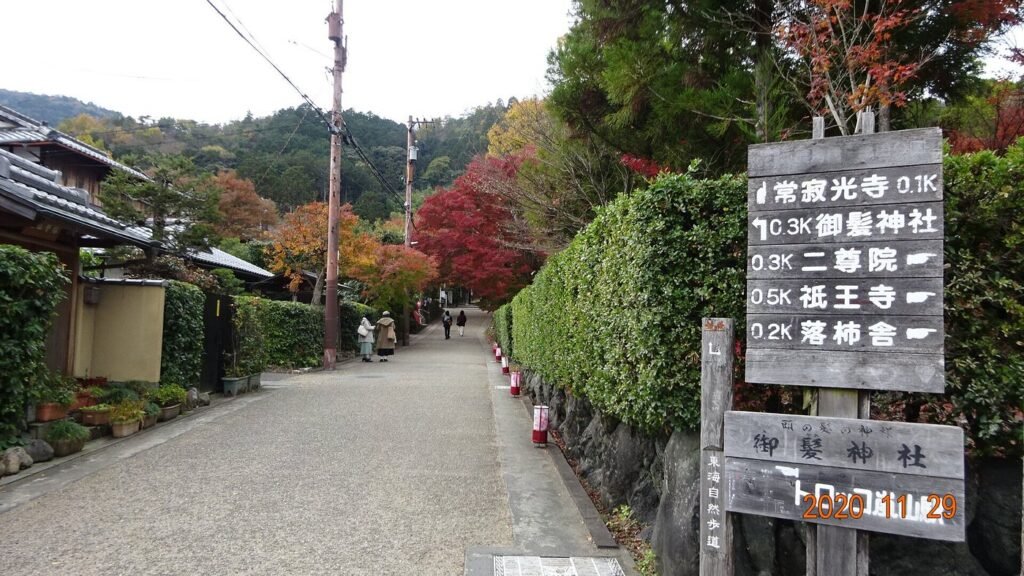
The physical structure of Rakushisha is a masterclass in rustic, Edo-period rural architecture. The main building features a traditional, beautifully weathered thatched roof and simple earthen walls that perfectly blend into the surrounding natural landscape. The grounds are meticulously maintained, featuring a small, tranquil garden, a historic well, and the aforementioned persimmon trees. Visitors can peer into the dimly lit interior to see the simple living quarters, tatami mats, and the poetic atmosphere that inspired countless haiku verses.
The Saga Diary and Literary Significance
Rakushisha holds a special place in Japanese literary history because it served as the backdrop for Basho’s famous travelogue, the Saga Diary (Saga Nikki). During his stay at the hut in 1691, Basho recorded the daily life, conversations, and poetic exchanges between himself, Kyorai, and other disciples. This text is considered a masterpiece of Japanese literature, and visiting the hut allows modern travelers to physically stand in the very space where these legendary literary moments unfolded.
A Peaceful Palate Cleanser for Temple Hopping
Because of its remote location at the western edge of the Arashiyama sightseeing district, Rakushisha remains blissfully untouched by the massive tour groups that flood the nearby Bamboo Grove. It provides a quiet, meditative environment where visitors can reflect on the beauty of Japanese poetry and nature. It is the perfect stop to decompress and recharge before or after exploring the grander, more imposing temples like Tenryu-ji or Adashino-Nembutsu-ji.
Essential Details
Location and Contact Information
The official English address for Rakushisha Poet’s Hut is 20 Hinomyojin-cho, Saga Ogurayama, Ukyo-ku, Kyoto. In Japanese, the address is written as 右京区嵯峨小倉山緋明神町20. For any inquiries, the temple can be reached via telephone at 075-881-1953.
Operating Hours and Admission Fees
The hut is open to the public daily from 9:00 AM to 5:00 PM during the main tourist season. However, during the colder winter months of January and February, the operating hours are reduced to 10:00 AM to 4:00 PM. The facility is strictly closed on December 31st and January 1st for the New Year holidays. The admission fee is incredibly affordable at just ¥300, though visitors can easily appreciate the rustic charm and tranquil atmosphere simply by viewing the exterior from the traditional wooden fence, which is completely free of charge.
Transportation and Access Routes
Rakushisha is located a bit of a walk from the main transit hubs, adding to its secluded charm. It is a 15-minute scenic walk from Saga-Arashiyama Station on the JR Sagano Line. If you are arriving via the Hankyu Railway, it is a longer 30-minute walk from Arashiyama Station. Many visitors choose to rent a bicycle in central Arashiyama to easily navigate the rural roads leading up to the poet’s hut.
Frequently Asked Questions
What is Rakushisha Poet’s Hut in Kyoto?
Rakushisha is a historic, thatched-roof cottage located in the Saga-Arashiyama district of Kyoto. It is famous for being the former residence of Mukai Kyorai, a prominent disciple of the legendary haiku master Matsuo Basho, and serves as a preserved literary sanctuary.
Who originally lived in Rakushisha Poet’s Hut?
The hut was the home of Mukai Kyorai, a dedicated poet and one of the most important disciples of Matsuo Basho. Kyorai lived here and used it as a base for his poetic studies and daily life during the Edo period.
Did Matsuo Basho actually live at Rakushisha?
No, Matsuo Basho did not live at Rakushisha, though it is a common misconception. Basho frequently visited his disciple Kyorai here and even stayed at the hut for a period of time, but it was primarily Kyorai’s personal residence.
What does the name Rakushisha mean?
The name Rakushisha translates to the “Hut of Fallen Persimmons.” “Rakushi” means fallen persimmons, and “sha” means hut or cottage. It was named this way after a typhoon blew the roof off the cottage and covered the grounds in fallen fruit from the surrounding trees.
Why is Rakushisha called the Hut of Fallen Persimmons?
According to local legend, a severe typhoon once struck the area, destroying the thatched roof of the cottage and stripping the nearby persimmon trees. The interior and grounds were left completely blanketed in fallen persimmons, inspiring the poetic name that has endured for centuries.
How much does it cost to enter Rakushisha?
The admission fee to enter the grounds and view the interior of the cottage is a very modest ¥300. This small fee helps maintain the historic thatched roof and the surrounding garden.
Can I visit Rakushisha for free without going inside?
Yes, you can absolutely appreciate the rustic charm and historical significance of Rakushisha without paying the entrance fee. The exterior of the thatched-roof cottage, the traditional wooden fencing, and the surrounding rural atmosphere can be easily viewed from outside the gate for free.
What are the opening hours for Rakushisha Poet’s Hut?
During the peak season from March to December, Rakushisha is open from 9:00 AM to 5:00 PM. During the winter months of January and February, the hours are slightly reduced, operating from 10:00 AM to 4:00 PM.
When is Rakushisha closed to the public?
Rakushisha is closed to the public on December 31st and January 1st to observe the New Year holidays. Otherwise, it remains open daily throughout the year, with adjusted hours in the winter.
Where is Rakushisha located in relation to central Arashiyama?
Rakushisha is located in the Saga-Ogurayama area, which is at the far western, mountainous edge of the broader Arashiyama sightseeing district. It is situated in a quiet, rural neighborhood far removed from the busy main tourist streets.
How do I get to Rakushisha from Saga-Arashiyama Station?
From JR Saga-Arashiyama Station, it is a pleasant and scenic 15-minute walk westward through rural roads and traditional neighborhoods. Follow the signs pointing toward Rakushisha or Adashino-Nembutsu-ji, as they are located in the same general direction.
Can I walk to Rakushisha from the main Arashiyama Bamboo Grove?
Yes, but it is quite a long walk. It will take approximately 30 to 40 minutes on foot from the main Arashiyama Bamboo Grove. Because of the distance, many tourists prefer to rent a bicycle or take a short taxi ride to reach the hut.
What is the Saga Diary (Saga Nikki)?
The Saga Diary is a famous piece of Japanese travel literature written by Matsuo Basho. It documents his stay at Rakushisha in 1691, recording the daily lives, poetic exchanges, and interactions between Basho, Kyorai, and their disciples in the rustic countryside.
Are there still persimmon trees at Rakushisha today?
Yes, the grounds of Rakushisha still feature persimmon trees, paying homage to the cottage’s famous namesake. While the exact trees from Basho’s time are long gone, the presence of the fruit trees maintains the historical and poetic atmosphere of the landscape.
Is Rakushisha Poet’s Hut wheelchair accessible?
Unfortunately, the historic nature of the site makes it difficult for wheelchair access. The path to the cottage involves uneven rural roads, and the entrance to the hut itself requires stepping over traditional wooden thresholds and walking on tatami mats, which are not wheelchair friendly.
How long does it take to explore Rakushisha?
A standard visit to Rakushisha takes about 20 to 30 minutes. This is enough time to view the exterior, pay the small fee, look into the main cottage, read the informational plaques, and enjoy the quiet atmosphere of the garden.
What other historical sites are located near Rakushisha?
Rakushisha is located very close to several other incredible, off-the-beaten-path sites in the Saga area, including Adashino-Nembutsu-ji Temple (famous for its 8,000 stone statues), Otagi-Nenbutsu-ji Temple, and the beautiful Gio-ji Temple with its moss garden.
Is Rakushisha crowded with large tour groups?
No, Rakushisha is remarkably peaceful and rarely crowded. Because it is located a bit of a walk from the main Arashiyama transit hubs, it is largely bypassed by large tour buses and the masses of tourists that flock to the Bamboo Grove, offering a highly tranquil experience.
What is the best time of year to visit Rakushisha?
Autumn (November) is a spectacular time to visit, as the surrounding foliage turns vibrant shades of red and gold, and the persimmon trees are often heavy with bright orange fruit. Spring is also beautiful when the rural landscape is lush and green.
Can I take photographs inside the Rakushisha cottage?
Photography of the exterior, the garden, and the thatched roof is highly encouraged. However, out of respect for the historic preservation of the site and the privacy of the space, photography inside the actual cottage interior is generally prohibited.