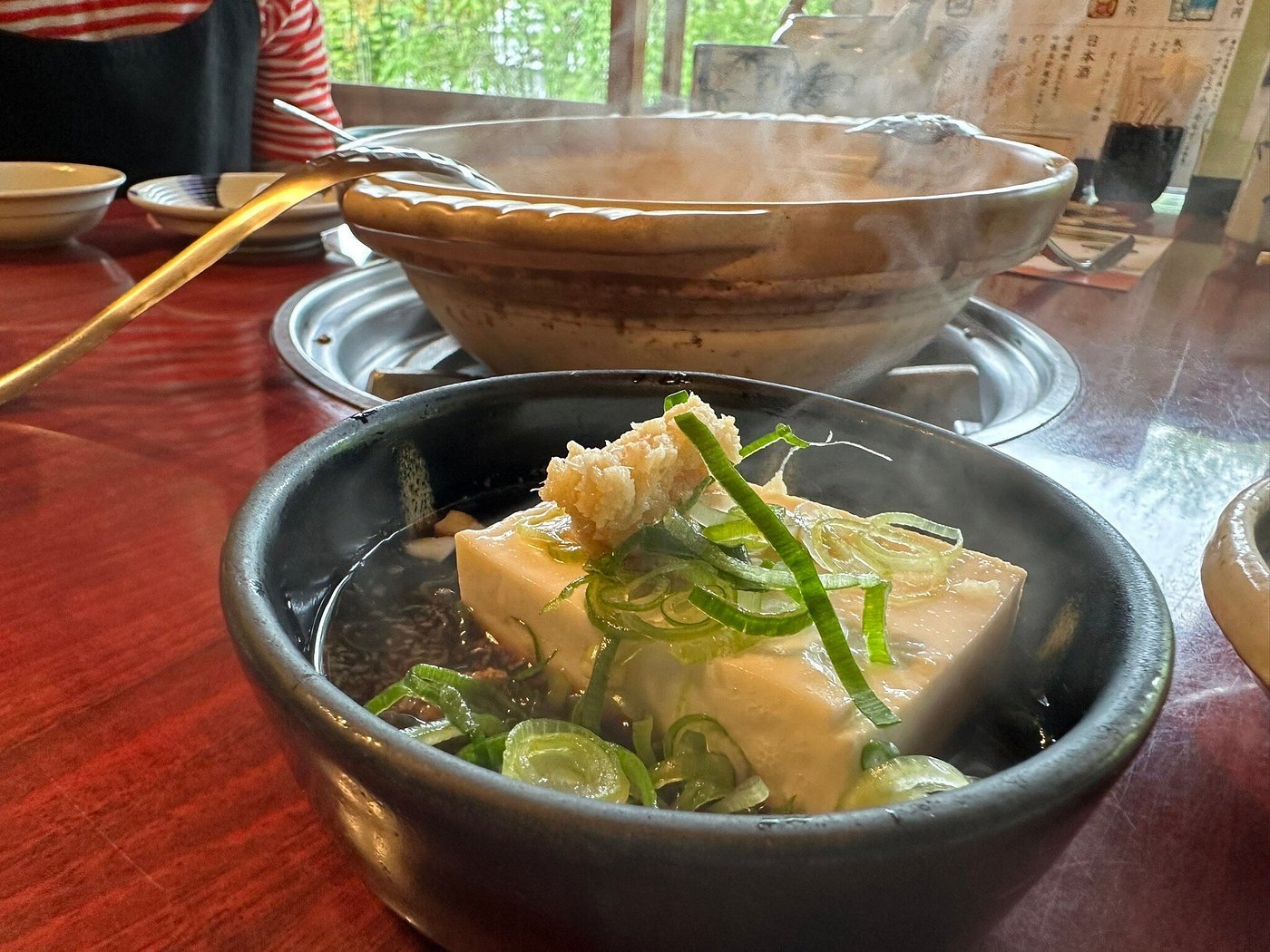
Eating authentic tofu in Kyoto is a culinary revelation. Far surpassing the firm blocks found in Western supermarkets, Japanese soybean curd is elevated here to a delicate, savory art form. If you are seeking the best tofu cuisine in Kyoto, this guide highlights the city’s most exceptional, artisan soy-based dining experiences.
Why Kyoto Tofu Tastes Better
Kyoto prides itself on its pristine, soft water and historic soy products, making it the undisputed capital of tofu in Japan. Thanks to the region’s unique terroir and deep Zen Buddhist heritage, local artisans craft unparalleled dishes. The famously soft water yields an incredibly smooth, creamy texture that literally melts in your mouth.
Whether you are savoring yudofu (a delicate, simmered tofu hotpot), freshly made yuba (silky, layered soy milk skin), or rich soy milk variations, Kyoto consistently offers the nation’s finest culinary expressions of this humble ingredient.
Vegan and Vegetarian Tofu Tips
Important note for plant-based diners: Tofu restaurants in Japan are not automatically vegetarian. Most traditional kitchens rely on dashi (a foundational broth typically made from kelp and bonito fish flakes) to build rich umami flavors.
While some establishments are happy to prepare vegan or vegetarian-friendly dishes with advance warning, do not expect on-the-spot menu adjustments. We highly recommend researching and confirming dietary accommodations directly with the restaurant when making your reservation to ensure a completely meat-free and fish-free meal.
Top Kyoto Tofu Restaurants
Eating authentic, freshly crafted tofu in Kyoto is an unmissable experience. Here are our top-rated local favorites for your next culinary adventure.
Tosuiro Downtown Kyoto
If you think you know tofu, think again. The master artisans at this renowned downtown Kyoto branch elevate simple soybeans into a multi-course, kaiseki-style masterpiece. Expect exquisite seasonal presentations, rich umami flavors, and a premium dining atmosphere that completely redefines what tofu can be. You can enjoy everything from nutty sesame tofu to rich soy milk hotpots. Advance reservations are highly recommended for this expensive but unforgettable meal.
Yudofu Sagano Arashiyama
Located in the scenic, historic Arashiyama district, Yudofu Sagano is the perfect spot to experience a classic Buddhist specialty. Enjoy tender, silken chunks of freshly made tofu gently simmered in a fragrant, aromatic kombu (kelp) broth. The meal is traditionally served alongside seasonal vegetables, house-made pickles, and savory dipping sauces, offering a warming, comforting experience after a long day of sightseeing.
More Kyoto Dining Guides
Ready to explore further culinary delights? Check out our comprehensive guides to discover all the top recommended restaurants in Kyoto, from hidden local ramen shops to world-class fine dining experiences.
Frequently Asked Questions About Kyoto Tofu
Why is Kyoto famous for tofu?
Kyoto is famous for tofu because of its exceptionally soft, pure groundwater, which is essential for making smooth, high-quality soybean curd. Additionally, the city’s deep Zen Buddhist history promoted meatless diets, making tofu and yuba the primary protein sources and the star of traditional Kyoto cuisine.
Is traditional Japanese tofu vegan?
Plain tofu itself is 100% vegan, but traditional tofu dishes in Kyoto restaurants are often not. Many classic preparations, like yudofu (tofu hotpot), are simmered in dashi, a broth typically made from kombu (kelp) and katsuobushi (dried bonito fish flakes). Always ask for a vegan dashi or kombu-only broth if you are strictly plant-based.
What is the difference between Japanese and Western tofu?
Japanese tofu, especially in Kyoto, is generally much softer, creamier, and more delicate than the firm, dense blocks commonly found in Western supermarkets. It is often made fresh daily and has a naturally sweet, nutty soy flavor that is meant to be eaten with minimal seasoning to highlight its natural taste.
What is yudofu and how do you eat it?
Yudofu is a traditional Japanese tofu hotpot where blocks of silken or firm tofu are gently simmered in a hot kombu (kelp) broth. To eat it, you simply use chopsticks to transfer the warm tofu from the communal pot to your individual bowl, then dip it into a special sauce made of soy sauce, citrus (ponzu), grated daikon radish, and green onions.
What is yuba in Japanese cuisine?
Yuba is the delicate, silky skin or film that naturally forms on the surface of heated soy milk. It is a highly prized delicacy in Kyoto, often served fresh as sashimi (lightly dipped in soy sauce), simmered in hotpot, or dried for later use. It has a rich, creamy texture and a concentrated, savory soy flavor.
What is the best tofu restaurant in Arashiyama, Kyoto?
Yudofu Sagano is widely considered one of the best tofu restaurants in the Arashiyama area. It specializes in traditional Buddhist-style yudofu and offers a beautiful, traditional dining experience with views of the surrounding nature, making it a perfect stop after visiting the famous bamboo grove.
What is the best luxury tofu restaurant in downtown Kyoto?
Tosuiro is the top choice for a premium, luxury tofu dining experience in downtown Kyoto. They offer an exquisite multi-course kaiseki-style menu that creatively transforms soybeans into a wide variety of dishes, including sesame tofu, tofu sashimi, and rich soy milk hotpots.
Do I need reservations for popular tofu restaurants in Kyoto?
Yes, reservations are highly recommended, especially for highly rated and popular spots like Tosuiro and Yudofu Sagano. Kyoto is a major tourist destination, and these renowned tofu restaurants fill up quickly. Booking in advance also gives you time to request special dietary accommodations.
What is Shojin Ryori and how does it relate to Kyoto tofu?
Shojin Ryori is the traditional vegan dining style of Zen Buddhism in Japan. Because Buddhist monks abstain from eating meat and fish, tofu and yuba became the primary sources of protein. Kyoto, being the historical center of Japanese Buddhism, is the best place to experience authentic Shojin Ryori, where tofu is the centerpiece of the meal.
How much does a tofu meal cost in Kyoto?
The cost of a tofu meal in Kyoto varies widely depending on the restaurant and time of day. A casual lunch set at a mid-range spot like Yudofu Sagano typically costs between 2,000 to 4,000 yen. For a high-end, multi-course kaiseki tofu dinner at a premium restaurant like Tosuiro, expect to pay anywhere from 8,000 to 15,000 yen or more per person.