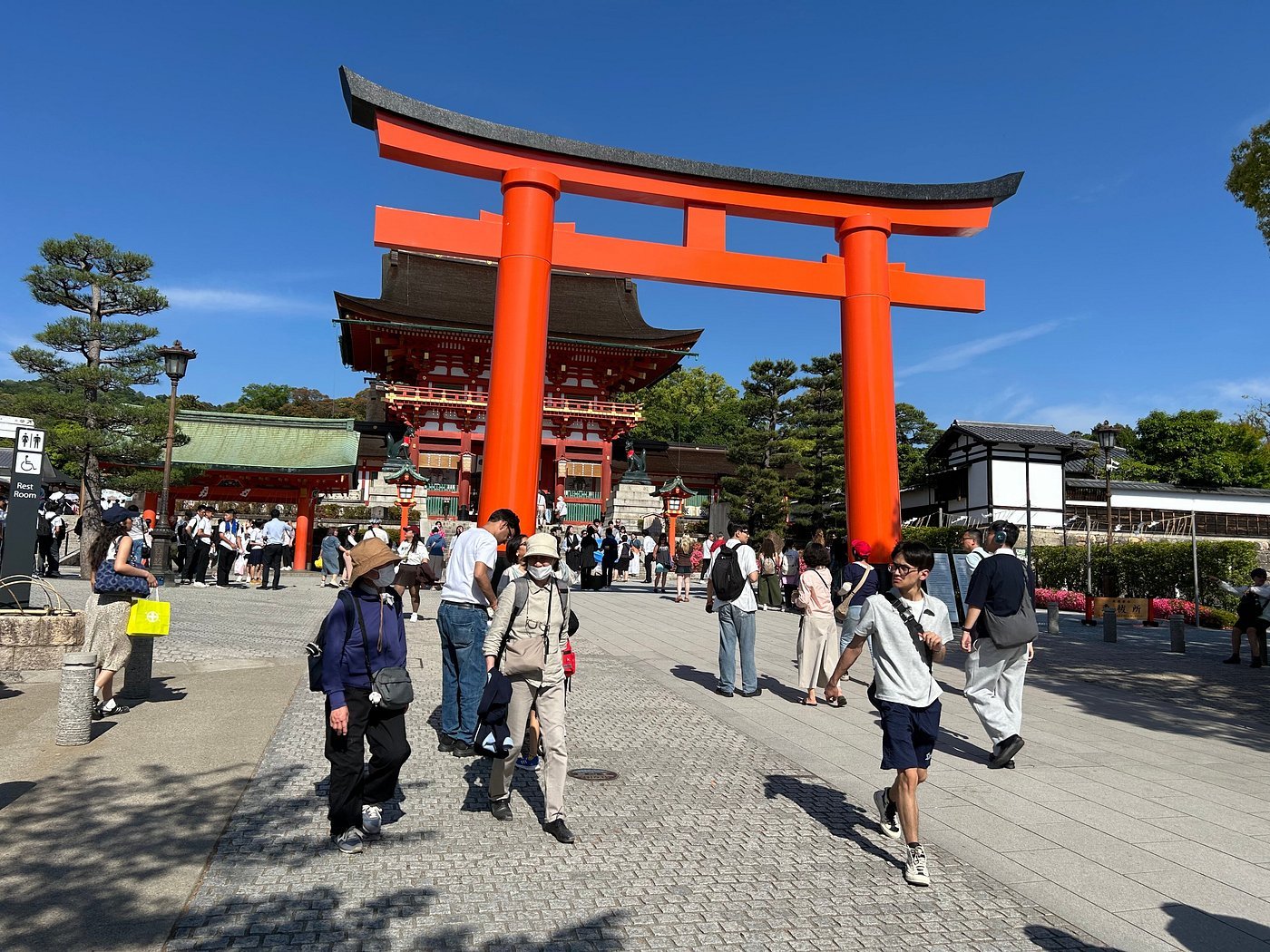
Fushimi-Inari-Taisha Shrine is undeniably the single most impressive and culturally significant sight in all of Kyoto. Far more than just a standard Shinto shrine, it is a sprawling, sacred world of sub-shrines, stone foxes, and thousands of vermilion torii gates that cascade up the entire slopes of Mount Inari. As the head shrine of Inari worship throughout Japan, it holds immense spiritual importance and stands as a breathtaking testament to traditional Japanese architecture and devotion. For any traveler visiting Kyoto, exploring this magnificent mountain sanctuary is an absolute, non-negotiable must-do experience.
Quick Facts
Ideal Guests and Top Highlights
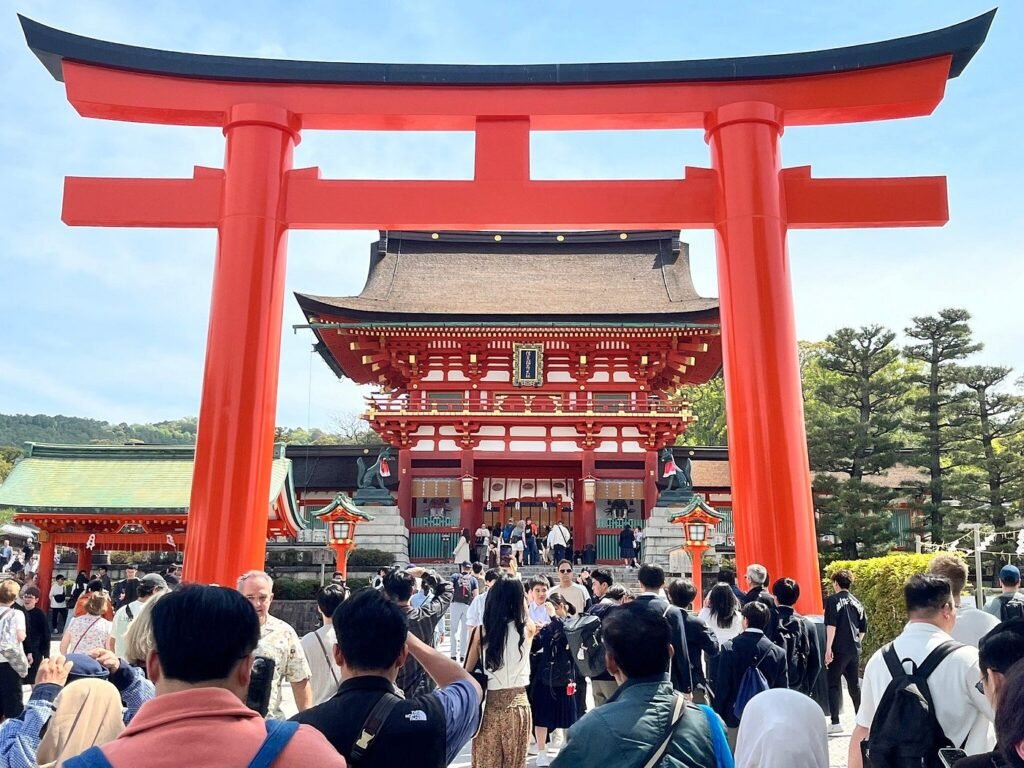
This iconic destination is highly recommended for first-time visitors to Japan, photography enthusiasts, hiking lovers, and spiritual seekers. Top highlights include the mesmerizing Senbon Torii (thousands of vermilion gates), the scenic Mount Inari hiking trail, the impressive Romon Gate, and the thousands of stone fox statues that serve as divine messengers.
Sample Pricing and Accessibility
Admission to the shrine grounds and the Mount Inari hiking trail is completely free, making it one of the most accessible and budget-friendly major attractions in Kyoto. The shrine is open 24 hours a day, from dawn to dusk and beyond, allowing for highly flexible itinerary planning.
The Iconic Senbon Torii Gates
The Vermilion Tunnels of Mount Inari
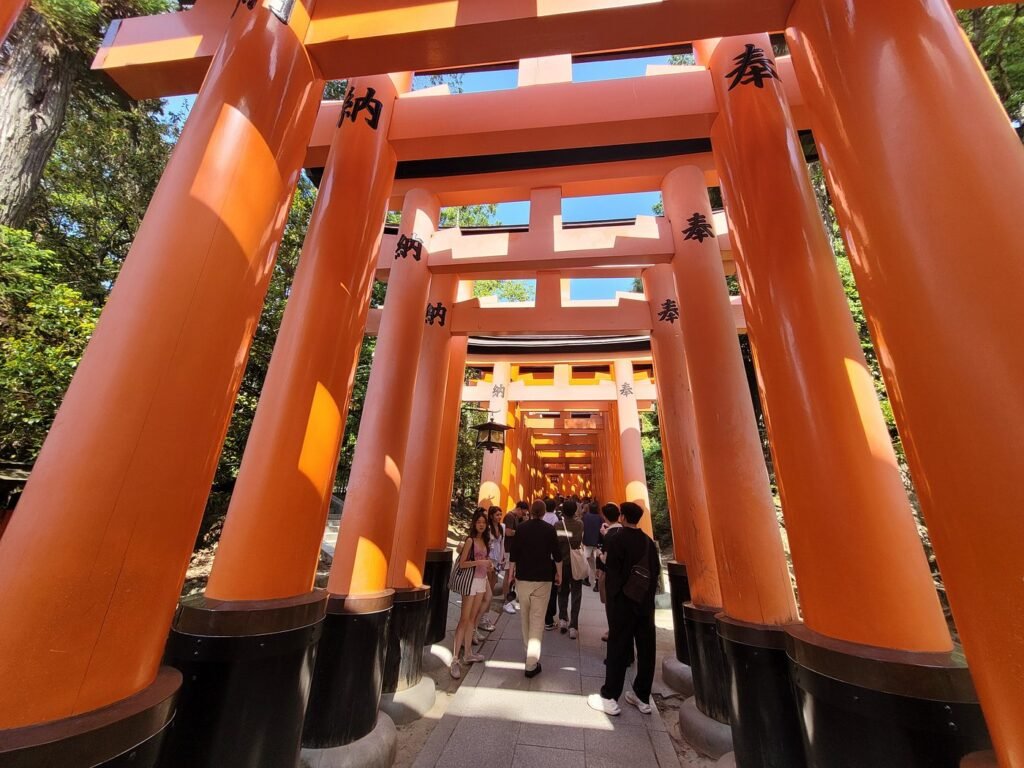
The most globally recognized feature of Fushimi-Inari is the Senbon Torii, or “thousands of torii gates.” These striking, vibrant orange-red gates form dense, magical tunnels that wind up the lower slopes of the mountain. The color vermilion is traditionally believed to ward off evil spirits and represent the sun and life force. Walking through these illuminated pathways, where the sunlight filters through the gaps in the wood, provides a deeply atmospheric and otherworldly experience that is entirely unique to this shrine.
The Tradition of Gate Donations
The sheer volume of torii gates is the result of a centuries-old tradition of gratitude and prayer. Individuals, families, and corporations donate these gates to the shrine to express thanks for fulfilled wishes, business prosperity, or to pray for future success. Each gate bears the name of the donor and the date of the donation on its reverse side, creating a living, physical record of the faith and gratitude of millions of people over hundreds of years.
Hiking the Sacred Mount Inari Trail
The Journey to the Summit
The shrine grounds extend all the way up the 233-meter peak of Mount Inari, creating a comprehensive 4-kilometer hiking trail. The hike is well-maintained, paved in many sections, and features countless stone steps. While the lower sections near the Senbon Torii are the most crowded, the path gradually opens up as you ascend, revealing smaller, quieter sub-shrines, ancient cedar trees, and beautiful moss-covered stone lanterns. Reaching the summit rewards hikers with a spectacular, panoramic view of the entire Kyoto basin.
Pacing Your Ascent
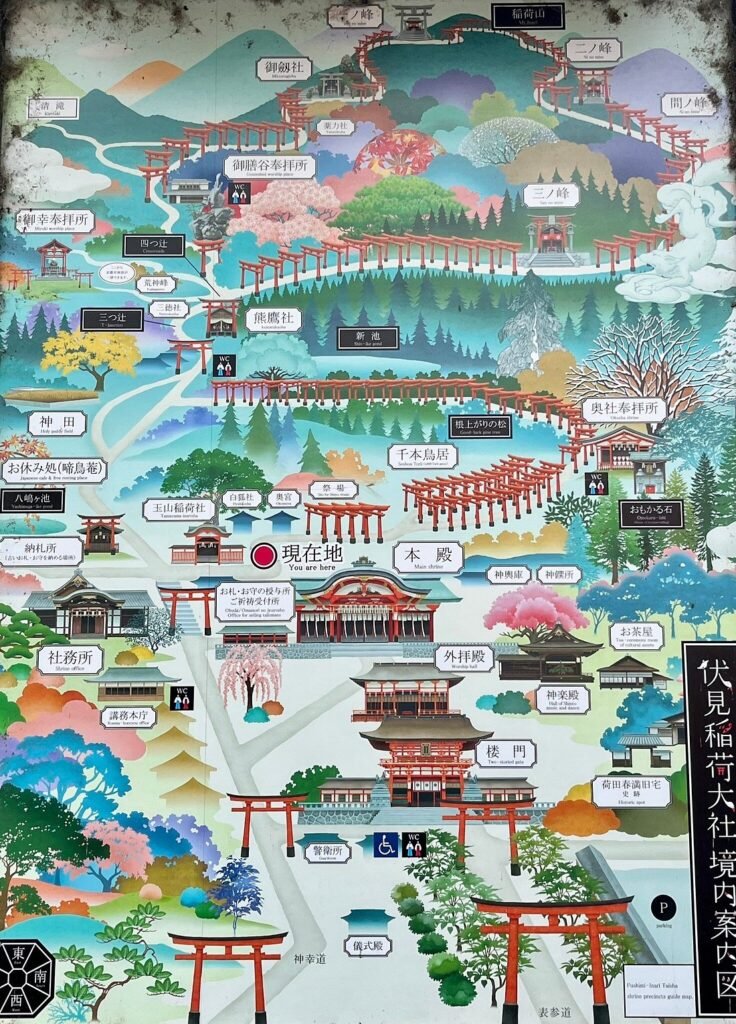
A complete round-trip hike to the summit and back typically takes between two to three hours at a leisurely pace. However, visitors do not need to commit to the full hike to enjoy the shrine. Many travelers choose to walk up to the Yotsutsuji intersection, which is about halfway up the mountain and offers excellent panoramic views of Kyoto, before turning back. This shorter route takes about 45 minutes to an hour and is perfect for those short on time.
The Main Shrine Complex and Inari Okami
Worshipping the Deity of Rice and Commerce
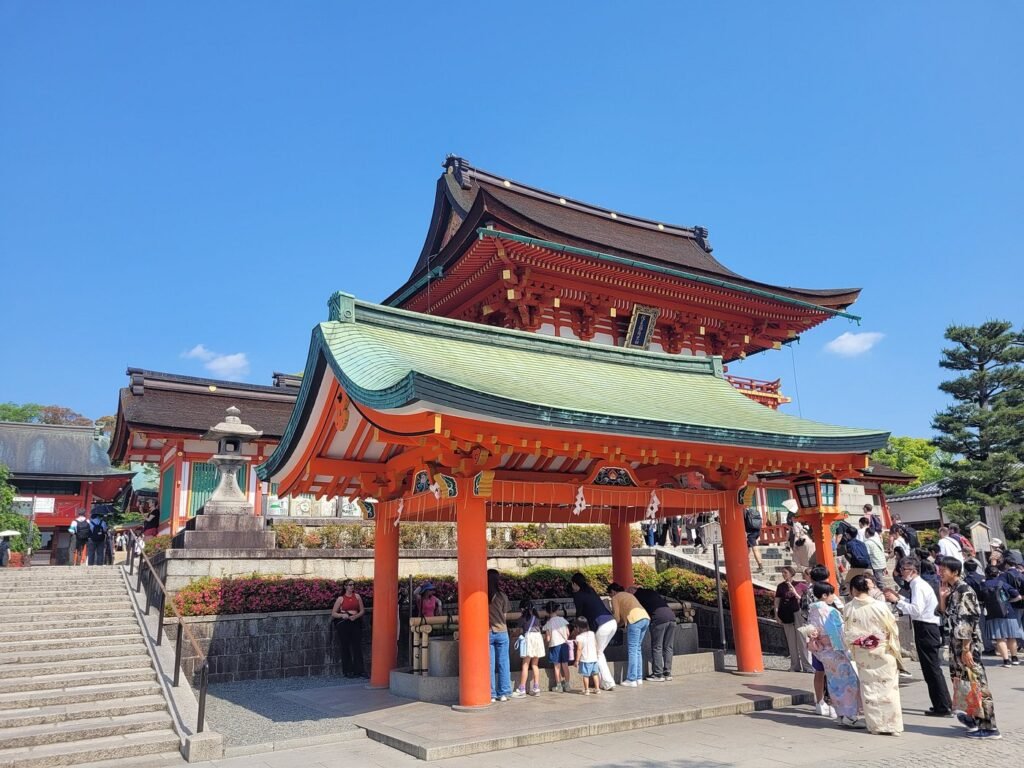
At the base of the mountain lies the main shrine complex, a vibrant and bustling hub of religious activity. The shrine is dedicated to Inari Okami, the Shinto deity of rice, agriculture, foxes, and ultimately, business prosperity and worldly success. Because of this association with commerce, Fushimi-Inari is incredibly popular among business owners and entrepreneurs who come to pray for financial success and offer donations.
The Stone Fox Messengers
Throughout the entire shrine complex and up the mountain trail, visitors will notice thousands of stone fox statues, known as kitsune. In Shinto belief, foxes are the divine messengers and servants of Inari Okami. These statues are highly detailed and often hold specific items in their mouths or under their paws, such as a key (to the rice granary), a scroll, a jewel, or a sheaf of rice, each symbolizing different aspects of the deity’s power and blessings.
Strategic Visiting Tips to Beat the Crowds
Experiencing the Shrine at Dawn and Dusk
Because Fushimi-Inari is one of the most famous tourist destinations in Japan, the lower areas and the main torii gate tunnels can become overwhelmingly congested during midday. However, because the shrine never closes, the best strategy is to visit very early in the morning (around 7:00 AM or earlier) or late in the evening after sunset. During these off-peak hours, the shrine is bathed in a serene, mystical atmosphere, and you can experience the towering torii gates in near solitude, accompanied only by the sounds of nature and the distant ringing of shrine bells.
Essential Details
Location, Contact, and Access Information
- English Name: Fushimi-Inari-Taisha Shrine
- Japanese Name: 伏見稲荷大社 (Fushimi Inari Taisha)
- English Address: 68 Yabunouchi-cho, Fukakusa, Fushimi-ku, Kyoto
- Japanese Address: 〒612-0882 京都府京都市伏見区深草藪之内町68
- Opening Hours: Open 24 hours a day (Dawn to dusk for main buildings, grounds always accessible)
- Admission Fee: Completely Free
- Nearest Transport (JR): 5-minute walk from Inari Station (JR Nara Line)
- Nearest Transport (Private): 10-minute walk from Fushimi-Inari Station (Keihan Line)
- Telephone: 075-561-1551
- Website: Official Website (English available)
Frequently Asked Questions
What is Fushimi-Inari-Taisha Shrine famous for?
Fushimi-Inari-Taisha is globally famous for its Senbon Torii, a mesmerizing network of thousands of vibrant vermilion torii gates that form tunnels up the slopes of Mount Inari. It is the head shrine of Inari worship in Japan and is considered the most important and visually striking shrine in Kyoto.
How many torii gates are actually at Fushimi-Inari?
While the exact number fluctuates as new gates are donated and old ones are retired, it is estimated that there are over 10,000 torii gates lining the trails of Mount Inari. The name “Senbon Torii” translates to “thousands of torii gates,” which is a poetic way to describe the massive scale of the installation.
Who donates the torii gates at Fushimi-Inari?
The torii gates are donated by individuals, families, and corporations as offerings of gratitude to the shrine. People donate them to thank the deity Inari Okami for business success, fulfilled prayers, or to pray for future prosperity. The name of the donor and the date are inscribed on the back of each gate.
How long does it take to hike the entire Mount Inari trail?
A complete round-trip hike from the main shrine entrance to the summit of Mount Inari and back down takes approximately 2 to 3 hours at a moderate, leisurely pace. The trail is about 4 kilometers (2.5 miles) long in total.
Is Fushimi-Inari-Taisha open at night?
Yes, Fushimi-Inari-Taisha is open 24 hours a day, 365 days a year. The shrine grounds and the hiking trails are accessible at all times, and the torii gates are illuminated by subtle lanterns at night, creating a highly magical and atmospheric experience.
What is the best time of day to visit Fushimi-Inari to avoid crowds?
The absolute best times to visit are early in the morning before 8:00 AM, or late in the evening after 6:00 PM. Midday, especially between 10:00 AM and 3:00 PM, sees the heaviest foot traffic, making the lower torii tunnels extremely congested and difficult to photograph without crowds.
How do I get to Fushimi-Inari from Kyoto Station?
The most convenient way to reach Fushimi-Inari from Kyoto Station is to take the JR Nara Line. The ride to Inari Station takes only about 5 minutes, and the shrine entrance is just a 5-minute walk from the station. Alternatively, you can take the Keihan Line to Fushimi-Inari Station, which is a 10-minute walk from the shrine.
Is there an entrance fee for Fushimi-Inari Shrine?
No, admission to Fushimi-Inari-Taisha Shrine, including the main grounds, the torii gate tunnels, and the entire Mount Inari hiking trail, is completely free of charge. There are no ticket booths or hidden fees.
What deity is worshipped at Fushimi-Inari?
The shrine is dedicated to Inari Okami, the Shinto deity of rice, agriculture, foxes, and worldly prosperity. Over time, the worship of Inari evolved to encompass business success, commercial prosperity, and the fulfillment of personal wishes, making it incredibly popular among merchants and entrepreneurs.
What do the stone fox statues at Fushimi-Inari represent?
The stone foxes, or kitsune, are the divine messengers and servants of Inari Okami. They are often depicted holding specific symbolic items in their mouths, such as a key (representing the key to the rice granary), a scroll (representing wisdom or sacred teachings), a jewel (representing the spirit of the deity), or a sheaf of rice.
How difficult is the Mount Inari hike?
The hike is considered relatively easy to moderate. The trails are well-paved, clearly marked, and feature stone steps and gentle inclines for the most part. While there are some steep sections near the summit, the path is highly accessible for most people with a basic level of fitness.
Can I reach the summit of Mount Inari?
Yes, you can absolutely reach the summit. The summit features a small shrine, a beautiful view of the Kyoto skyline, and a peaceful atmosphere. However, you do not have to go all the way to the top; the Yotsutsuji intersection, located about halfway up, offers excellent views and is a popular turning point for those short on time.
Are there food and drink options at Fushimi-Inari?
Yes, the approach to the shrine and the lower areas of the mountain are lined with numerous food stalls, cafes, and restaurants. You can find street food like grilled skewers, Inari sushi (sweet tofu pockets), matcha sweets, and soft drinks. There are also vending machines located along the hiking trail for hydration.
What is the Senbon Torii?
The Senbon Torii literally translates to “thousand torii gates.” It refers to the dense, continuous rows of vermilion torii gates that line the main hiking trails of Mount Inari, starting just behind the main shrine hall. It is the most iconic and photographed feature of the entire shrine complex.
Is Fushimi-Inari crowded during cherry blossom season?
Yes, Fushimi-Inari becomes exceptionally crowded during the spring cherry blossom season (late March to early April) and the autumn foliage season (November). While the mountain itself does not have many cherry trees, the overall surge in Kyoto’s tourist population during these seasons makes the shrine’s lower areas highly congested.
What should I wear when visiting Fushimi-Inari?
You should wear comfortable, supportive walking shoes with good grip, as the mountain trail involves thousands of stone steps that can be slippery when wet. Dress in layers, as the temperature can vary between the shaded lower trails and the exposed summit. Modest, respectful clothing is also recommended for the main shrine areas.
Can I take photographs inside the main shrine buildings?
Photography is generally permitted in the outdoor grounds, the torii gate tunnels, and the mountain trails. However, photography and video recording are strictly prohibited inside the main worship hall (Honden) and other restricted indoor sacred spaces to maintain a respectful atmosphere for prayer.
What is the Yotsutsuji intersection on the trail?
Yotsutsuji is a crucial intersection located roughly halfway up Mount Inari. It is a popular resting spot and the most common turning point for visitors who do not wish to hike all the way to the summit. It features a small shrine and offers some of the best panoramic views of Kyoto and the surrounding mountains.
Are there restrooms available at Fushimi-Inari?
Yes, there are clean, well-maintained public restrooms available at the main shrine entrance, near the Romon Gate, and at several points along the hiking trail, including the Yotsutsuji intersection. It is highly recommended to use them before starting your ascent.
How far in advance should I plan my visit to Fushimi-Inari?
Because the shrine is free and open 24/7, you do not need to make reservations or plan far in advance to enter. However, to have a truly enjoyable and uncrowded experience, you should plan to arrive at the shrine very early in the morning (before 7:30 AM) or late in the evening, which requires adjusting your daily itinerary accordingly.