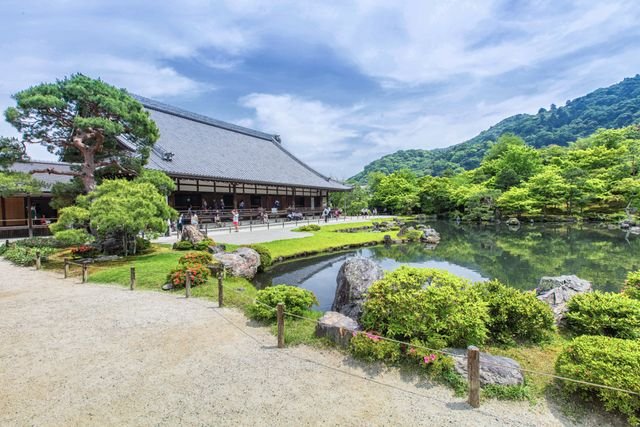
Tenryu-ji (Heavenly Dragon Temple) stands as the crowning jewel of Arashiyama and one of the most significant Zen temples in Kyoto. As the head temple of its own school within the Rinzai sect of Zen Buddhism, it holds the prestigious rank of first among Kyoto’s “Five Mountains” (Gozan). Designated as a UNESCO World Heritage site, this sprawling complex is celebrated for its profound historical legacy, stunning architectural halls, and the breathtaking Sogenchi Teien landscape garden. It serves as the ultimate starting point for any comprehensive exploration of western Kyoto.
Quick Facts
Ideal Guests
History enthusiasts, Zen Buddhism practitioners, landscape garden lovers, and photographers.
Top Highlights
UNESCO World Heritage status, the masterpiece Sogenchi Teien garden, the acoustic Cloud-Dragon ceiling painting, and seamless access to the Bamboo Grove.
Sample Pricing
Grounds entry is free; the inner Hojo garden is ¥500.
The Sogenchi Teien Landscape Garden
A Masterpiece of Borrowed Scenery
The undisputed highlight of Tenryu-ji is its central pond garden, Sogenchi Teien. Designed by the legendary Zen monk and garden master Muso Soseki in the 14th century, it is the only surviving example of his work in its original form. The garden is a premier example of shakkei (borrowed scenery), seamlessly integrating the lush, forested slopes of the Arashiyama mountains and the iconic Kameyama peak into the landscape design, making the distant mountains appear as an extension of the garden itself.
Seasonal Beauty and Zen Aesthetics
The garden features a large, serene pond surrounded by carefully placed rocks, ancient pine trees, and vibrant seasonal flora. In spring, weeping cherry blossoms frame the water; in summer, lush green maples provide deep shade; and in autumn, the hillside erupts in brilliant reds and golds. The layout is designed to reflect the Zen Buddhist pursuit of harmony between humanity and nature, offering a deeply meditative atmosphere.
Architectural Masterpieces
The Hatto (Dharma Hall) and Cloud-Dragon
Completed in 2009 to commemorate the 650th anniversary of the temple’s founding, the Hatto is a striking modern reconstruction of a traditional Zen Dharma Hall. The ceiling features a massive, breathtaking painting of a cloud-breathing dragon by artist Jundo Koike. When visitors clap their hands beneath the dragon, the hall’s unique architectural acoustics create a resonant echo known as tatsu-nari (dragon singing), mimicking the sound of a dragon’s roar.
The Butsuden (Main Hall)
The Main Hall houses the principal object of worship, a statue of Shakyamuni Buddha. While the original structures were destroyed over the centuries due to political conflicts and fires, the current buildings beautifully reconstruct the austere, elegant aesthetic of Muromachi-period Zen architecture. The sweeping roofs and wooden verandas provide the perfect vantage point for viewing the central garden.
Navigating the Temple Grounds
The Perfect Arashiyama Route
Tenryu-ji is strategically located, making it the logical first stop for an Arashiyama itinerary. Visitors typically enter through the main southern gate, explore the Main Hall, and view the garden from the veranda. After paying the small fee to enter the inner garden, guests walk through the lush pathways, experiencing the shakkei from multiple ground-level angles.
Direct Access to the Bamboo Grove
The most brilliant feature of the temple’s layout is its northern exit. Upon completing the garden tour, visitors exit through the north gate, which deposits them directly at the southern entrance of the world-famous Arashiyama Bamboo Grove. This seamless transition allows tourists to experience the serene Zen garden immediately followed by the towering, otherworldly bamboo forest.
Essential Details
English Name
Tenryu-ji Temple
Japanese Name
天龍寺
English Address
68 Susukinobaba-cho, Saga Tenryu-ji, Ukyo-ku, Kyoto
Japanese Address
〒616-8385 京都府京都市右京区嵯峨天龍寺芒ノ馬場町68
Opening Hours
8:30 AM to 5:00 PM (Last entry at 4:50 PM)
Admission (Grounds)
Free
Admission (Hojo Garden)
Adults/High School/College: ¥500 | Junior High/Elementary: ¥300
Cloud-Dragon Painting
Additional ¥500 (Open weekends, holidays, and special seasonal periods)
Nearest Transport
1-min walk from Arashiyama Station (Randen/Keifuku Line); 13-min walk from JR Saga-Arashiyama Station.
Telephone
075-881-1235
Web Presence
Official Website (English and Japanese)
Is Tenryu-ji Temple worth visiting in Arashiyama?
Absolutely. Tenryu-ji is widely considered the most important historical and cultural site in Arashiyama. As a UNESCO World Heritage site and the first of Kyoto’s Five Mountains, it offers a masterclass in Zen landscape design. The combination of the stunning Sogenchi Teien garden, the impressive architecture, and its direct connection to the Bamboo Grove makes it an unmissable destination.
How much time should I spend at Tenryu-ji Temple?
Most visitors spend between 45 minutes to 1.5 hours exploring Tenryu-ji. This allows ample time to view the Main Hall, stroll through the paid inner garden to appreciate the borrowed scenery, and admire the architecture. If you are visiting on a weekend to see the Cloud-Dragon painting, add an extra 20 minutes to your itinerary.
What is the difference between the free grounds and the paid garden at Tenryu-ji?
The outer grounds of Tenryu-ji, which include the Main Hall (Butsuden) and the approach to the garden, are completely free to enter. You can view the central pond garden from the veranda of the Main Hall at no cost. However, to walk down into the garden and experience the pathways up close, you must pay the ¥500 admission fee for the Hojo (abbey) garden area.
How do I get to Tenryu-ji Temple from Kyoto Station?
The easiest route is to take the JR San-in Line (Sagano Line) from Kyoto Station to Saga-Arashiyama Station. The train ride takes about 15 minutes. From the station, it is a scenic 13-minute walk through the bustling Arashiyama shopping streets directly to the temple’s main entrance. Alternatively, you can take the Keifuku (Randen) line from Shijo-Omiya, which drops you just a 1-minute walk from the gate.
Is the entrance to the Arashiyama Bamboo Grove inside Tenryu-ji Temple?
Yes, the most convenient and popular entrance to the Arashiyama Bamboo Grove is located just past the northern exit of the Tenryu-ji garden. After paying to walk through the temple’s landscape garden, you simply exit the north gate, and you will immediately find yourself at the southern end of the towering bamboo forest.
What is the Cloud-Dragon painting at Tenryu-ji Temple?
The Cloud-Dragon is a magnificent, massive mural painted on the ceiling of the Hatto (Dharma Hall). Created by contemporary Japanese artist Jundo Koike, the dragon is depicted breathing clouds across the ceiling. The hall is designed with special acoustics; when you stand in the center and clap your hands, the sound reverberates beautifully, creating an echo that sounds like a dragon’s roar.
When is the Cloud-Dragon painting open to the public?
The Hatto and the Cloud-Dragon ceiling painting are not open every day. They are typically open to the public on Saturdays, Sundays, and national holidays. They are also opened daily during special peak viewing periods in the spring (cherry blossom season) and autumn (fall foliage season). Always check the official temple calendar before visiting specifically for the painting.
Who designed the famous garden at Tenryu-ji?
The Sogenchi Teien garden was designed by Muso Soseki (also known as Muso Kokushi), a highly influential Zen monk, teacher, and landscape garden designer of the Muromachi period. Completed in the 14th century, it is the only surviving garden from his vast portfolio that remains in its original layout, making it incredibly significant to Japanese garden history.
What is “shakkei” or borrowed scenery at Tenryu-ji?
Shakkei is a traditional Japanese landscaping technique that translates to “borrowed scenery.” At Tenryu-ji, the garden designer intentionally framed the view so that the distant, forested Arashiyama mountains and Kameyama peak appear to be a natural extension of the garden’s own pond and trees. This creates an illusion of infinite space and seamlessly blends the cultivated garden with the wild nature beyond it.
Is Tenryu-ji Temple a UNESCO World Heritage site?
Yes, Tenryu-ji was designated as a UNESCO World Heritage site in 1994. It is included as a vital component of the “Historic Monuments of Ancient Kyoto” collection, recognized globally for its profound influence on Zen Buddhism, its historical role in Japanese politics, and its unparalleled contribution to the art of landscape gardening.
What are the opening hours for Tenryu-ji Temple?
The temple grounds and the Hojo garden are open daily from 8:30 AM to 5:00 PM. The last entry to the gardens is at 4:50 PM. During the winter months (December to February), the closing time is slightly earlier, at 4:30 PM, with the last entry at 4:20 PM.
How much does it cost to enter Tenryu-ji Temple?
Entering the main temple grounds and viewing the garden from the Main Hall veranda is completely free. To enter the inner Hojo garden and walk the pathways, the fee is ¥500 for adults, high school, and college students, and ¥300 for junior high and elementary school students. The Cloud-Dragon painting requires an additional ¥500 fee when it is open.
Can I take photos inside the Tenryu-ji garden?
Photography is generally permitted in the outer grounds and the Sogenchi Teien garden, allowing you to capture the beautiful borrowed scenery and the koi fish in the pond. However, photography is strictly prohibited inside the Main Hall (Butsuden), the Hojo (abbey) interiors, and the Hatto (Dharma Hall) where the Cloud-Dragon painting is located. Always look for posted signs and respect the rules.
Is Tenryu-ji Temple wheelchair accessible?
Tenryu-ji has partial wheelchair accessibility. The main entrance, the Main Hall, and the approach to the garden are accessible. However, the inner garden features gravel paths, stepping stones, and slight inclines that can be challenging for standard wheelchairs. Strollers are also difficult to maneuver on the gravel. It is highly recommended to contact the temple in advance if you require specific accessibility assistance.
What is the best time of day to visit Tenryu-ji Temple?
The best time to visit is right at opening time (8:30 AM). Arashiyama is one of the most crowded districts in Kyoto, and the Bamboo Grove becomes packed by mid-morning. By arriving at Tenryu-ji at 8:30 AM, you can enjoy the serene garden in relative peace before the massive tour groups arrive, and then walk straight into the Bamboo Grove while it is still quiet.
What sect of Buddhism does Tenryu-ji Temple belong to?
Tenryu-ji belongs to the Rinzai sect of Zen Buddhism. Specifically, it is the head temple of the Tenryu-ji school, one of the 15 branches of Rinzai Zen in Japan. The temple was originally established to soothe the spirits of Emperor Go-Daigo, who died in exile, and remains a vital center for Zen training and practice.
Are there restrooms available at Tenryu-ji Temple?
Yes, there are clean, well-maintained public restrooms available for visitors. They are located near the main entrance and just outside the ticket gate for the inner garden. It is a good idea to use them before entering the garden pathways, as facilities are not available inside the paid garden area itself.
Can I feed the koi fish in the Tenryu-ji pond?
No, feeding the koi fish in the Sogenchi Teien pond is strictly prohibited. The pond is a carefully balanced part of a UNESCO World Heritage landscape garden. Feeding the fish can disrupt the ecosystem, pollute the water, and harm the health of the koi. Visitors are asked to simply observe the beautiful, large carp swimming in the clear water.
What other attractions are located near Tenryu-ji Temple?
Tenryu-ji is perfectly situated in the heart of Arashiyama. Just steps away, you will find the Arashiyama Bamboo Grove, the scenic Togetsukyo Bridge, and the Okochi Sanso Villa. A short walk across the river leads to the Iwatayama Monkey Park, while nearby you can find the Arashiyama Giant Pandas, numerous traditional sweet shops, and the scenic Saga-Toriimoto Preserved Street.
Is Tenryu-ji Temple crowded during cherry blossom and autumn seasons?
Yes, Tenryu-ji becomes exceptionally crowded during the peak spring cherry blossom season (late March to early April) and the autumn foliage season (mid-November to early December). The contrast of the pink blossoms or red maples against the green moss and pond is spectacular, drawing massive crowds. If visiting during these times, arriving at 8:30 AM is absolutely crucial to avoid the heaviest congestion.